
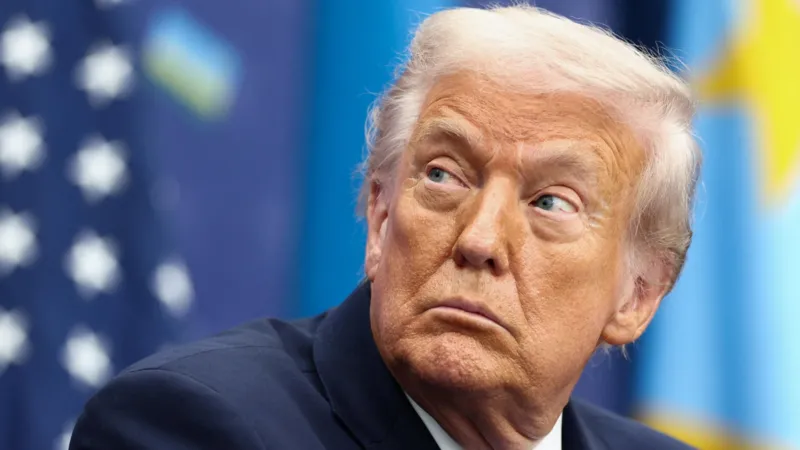
In a new strategy document that focuses specifically on Europe, the administration of President Donald Trump has stated that the continent is in danger of "civilisational erasure" and questioned the viability of particular nations as dependable allies. The US president lays out his vision for the world and the strategies he will use to achieve it in the 33-page National Security Strategy. Trump referred to the document as a "roadmap" to ensure that the United States of America continues to be "the greatest and most successful nation in the history of humanity." Politicians in Europe have begun to respond, with Germany's Foreign Minister Johann Wadephul declaring that his nation does not require "outside advice."
 |
| Image credit: Reuter/bbc |
Presidents typically issue a formal National Security Strategy once per term. It can show the world the president's priorities and serve as a framework for future budgets and policies. The new document is similar to Trump's remarks in his speech to the United Nations earlier this year, in which he harshly criticized Western Europe for its approach to clean energy and migration. The new report reaffirms Trump's position, calling for the reestablishment of "Western identity," combating foreign influence, putting an end to mass migration, and putting more of an emphasis on US priorities like putting an end to drug cartels. It says that Europe would be "unrecognizable in 20 years or less" if current trends continue, and that Europe's economic problems are "eclipsed by the real and more stark prospect of civilizational erasure." According to the document, "It is far from clear whether certain European countries will have economies and militaries strong enough to remain reliable allies." It also said that migration policies were "creating strife," censorship of free speech and suppression of political opposition, cratering birthrates, and loss of national identities and self-confidence," and that the European Union and "other transnational bodies" were engaged in activities that "undermine political liberty and sovereignty."
On the other hand, the document praises the expanding power of "patriotic European parties" and states that "America encourages its political allies in Europe to promote this revival of spirit." The far-right AfD party in Germany, which has been labeled as extreme right by German intelligence, has been nurtured by the Trump administration. The "United States is and will remain our most important ally in the [Nato] alliance" was emphasized by German Foreign Minister Wadephul. However, the focus of this alliance is on security policy issues." He went on to say, "I believe questions of freedom of expression or the organization of our free societies do not belong [in the strategy], at least when it comes to Germany." The document claims that Europe lacks "self-confidence" in its relationship with Russia in light of Russia's massive invasion of Ukraine. According to the document, significant US involvement will be required to manage European relations with Russia, and ending hostilities in Ukraine is a fundamental US interest. A plan to end the war has been proposed by the Trump administration. The initial version called for Ukraine to hand over some territory to Russia, which has de facto control over it. However, a modified version was presented in Moscow by Trump's envoy. Vladimir Putin, the head of Russia, has issued a warning that Ukraine's troops must leave the eastern Donbass region or Russia will take it by force. The need for the United States to defend itself from external threats is repeatedly mentioned in the White House strategy document.
A US vaccine panel votes to end the recommendation for newborns to get the hepatitis B vaccine.
 |
| Credit: bbc |
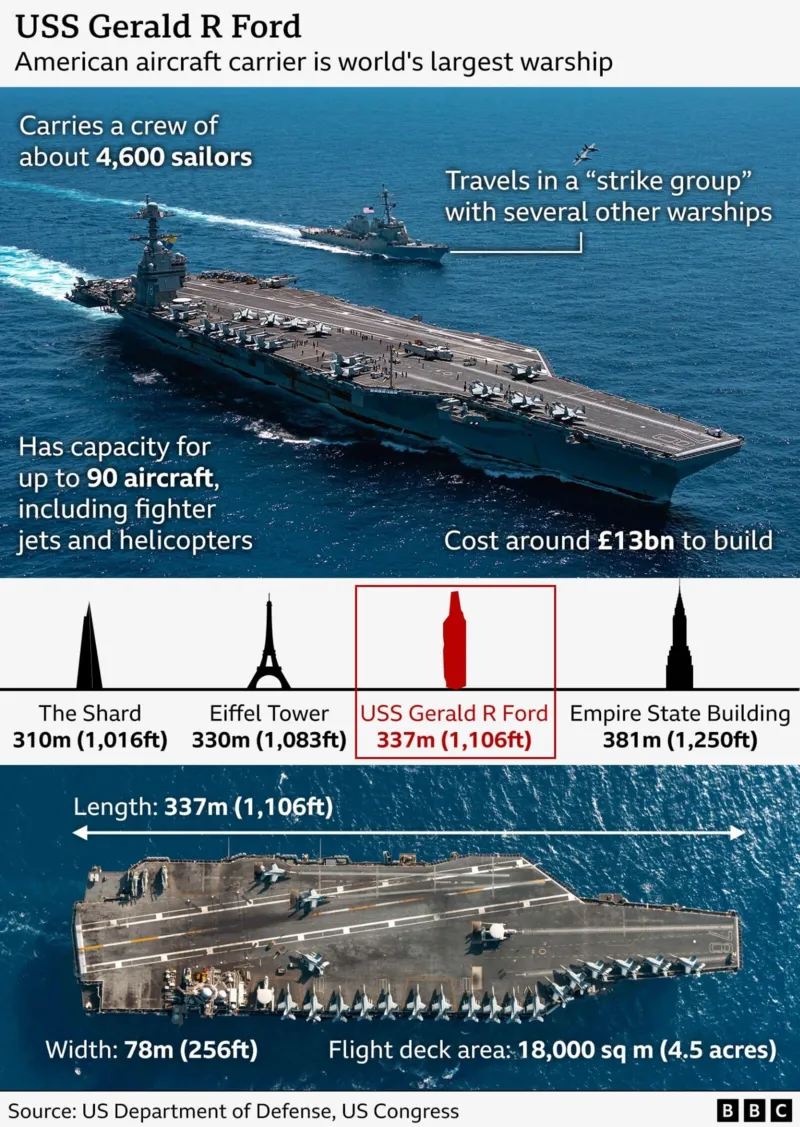
"Our global military presence to address urgent threats in our Hemisphere" must be revised, according to the document. The strategy calls for moving assets away from theaters that are no longer as crucial to American national security in order to accomplish this. This re-prioritising of military power can be seen already in the Caribbean, where the US military has a growing presence and has carried out repeated deadly strikes on boats which the government alleges are carrying drugs. The USS Gerald Ford, the largest warship in the world, and its strike group are currently stationed in the Caribbean. The document states that the United States will "harden and strengthen our military presence in the Western Pacific," which is located outside of the Western Hemisphere. The Trump administration cites the South China Sea as a key shipping route with significant repercussions for the US economy. The United States also asks Japan, South Korea, Australia, and Taiwan to spend more on defense. "Deterring a conflict over Taiwan, ideally by preserving military overmatch, is a priority" is the statement. China has not ruled out using force to "reunite" with Taiwan, which is self-governing. China considers Taiwan to be part of its territory. In line with some of the actions that the Trump administration has taken with its broad global tariffs, the strategy also talks about pushing for a stronger industrial base in the United States and less reliance on technologies from other countries.
Source: BBC News




 Posts
Posts


0 Comments