
 |
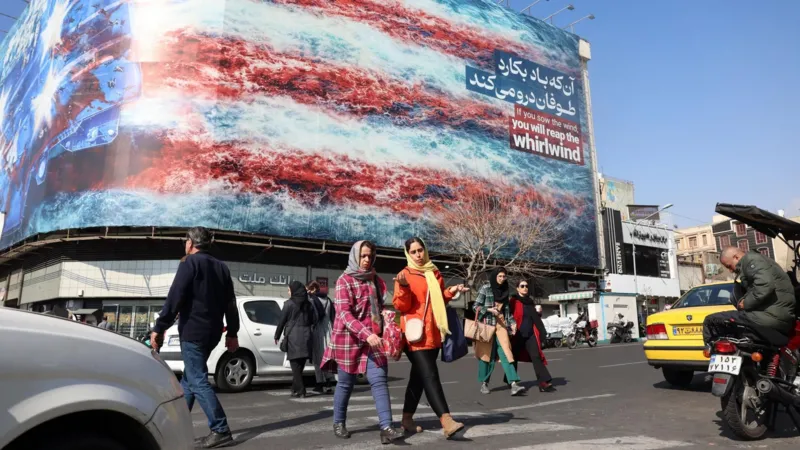
| Donald Trump says he prefers to do a deal with Iran rather than unleash a deadly war (Image:EPA) |
When he delivered the longest State of the Union address ever, he gave no clear signal to a world that was on edge waiting to see what US President Donald Trump would do next in the Middle East. During the largest expansion of American power in the Middle East since the 2003 US-led invasion of Iraq, the world's most powerful commander-in-chief chose not to elaborate on the merits of potential military action against Iran. President George W. Bush had traveled across the United States and beyond two decades earlier to prepare for what would eventually become a significant military intervention, albeit one based on incorrect intelligence. When his political base, who elected him to stay out of forever wars, is far more focused on the state of the economy and the fight over immigration just months before crucial midterm polls, Trump may have decided that it was not an issue to discuss. Or it may reflect his repeated claim that he has yet to make up his own mind about which path to pursue. He maintains that he would rather make a deal than start a bloody war. His decision-making is likely to be heavily influenced by the third crucial round of negotiations this month, which takes place on Thursday in Geneva. A diplomat who has been briefed on this process concluded, "If President Trump does not receive, through his envoys, an acceptable text from Tehran, he's likely to order some form of military action soon after." "We haven't heard from them those secret words: 'We do not want nuclear weapons ever'," the president said in his speech, highlighting one of his consistent demands as he has shifted his messaging on his end game in Iran from nuclear issues to regime change. Yet, just hours earlier, Iran's foreign minister and top nuclear negotiator, Abbas Araghchi, reiterated on X almost that exact phrase: "Iran will under no circumstances ever develop a nuclear weapon."
Read More:
It's the convincing proof, to allay suspicion that Tehran has been moving in that direction, that is a key issue in the ongoing talks mediated by the Gulf state of Oman.
Iran has indicated it is ready to compromise on its nuclear programme in exchange for the lifting of the sanctions crippling its economy.
A wave of unrest that was put down with a great deal of force in January was sparked by spiraling prices and a currency that was falling apart. The US-based Human Rights Activists News Agency (HRANA) has put its confirmed death toll at more than 7,000, including 6,488 protesters, and is still investigating reports of thousands more deaths. That number, according to the Iranian government, is approximately 3,100. Trump stated in his speech that the authorities appeared to have "killed at least, it looks like, 32,000 protesters." Esmail Baqai, the spokesperson for Iran's foreign ministry, called the president's comments about the death toll "big lies" right away.
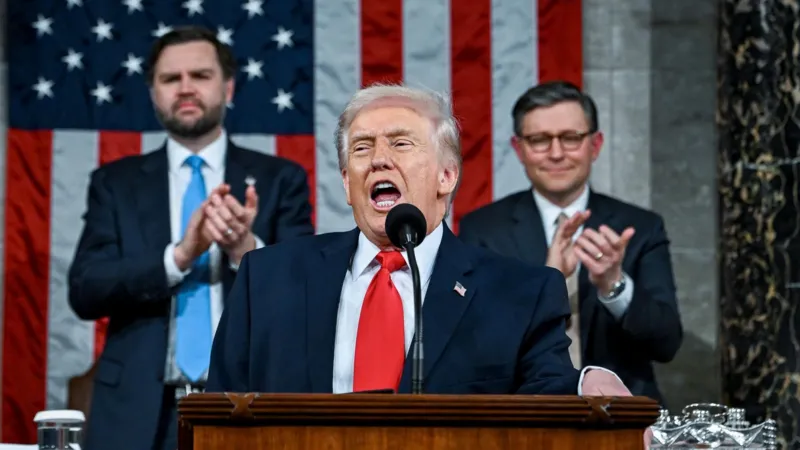 |
| Iran accused Trump of repeating "big lies" during his State of the Union address (Image: Reuters) |
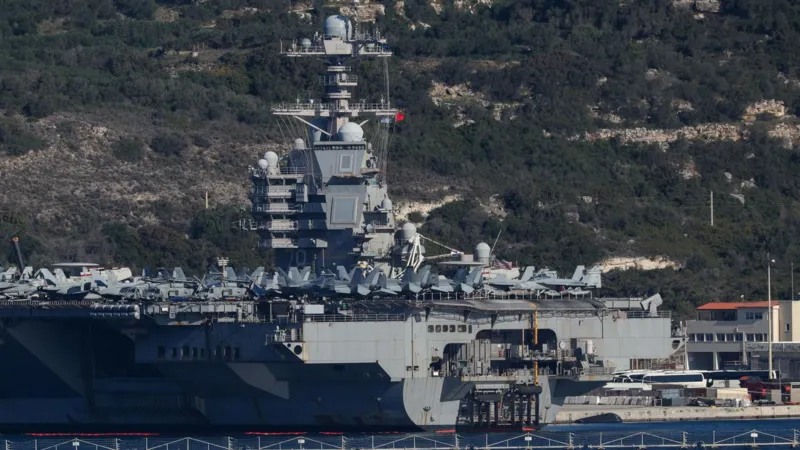 |
| The USS Gerald R Ford is one of two aircraft carriers being deployed in the Middle East (Image: Reuters) |




 Posts
Posts


0 Comments