
 |
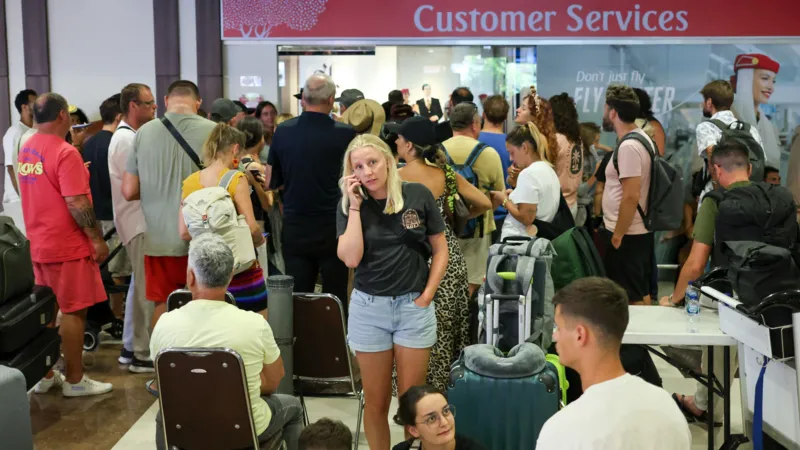
| Emirates has suspended all its operations in and out of Dubai, leaving passengers round the world stranded (Image:Reuters) |
Airlines are continuing to cancel and divert flights in the Middle East after the US and Israel launched strikes against Iran.
The airports in Tel Aviv, Dubai, Doha, and other regional international hubs have been closed to all flights. British citizens are being advised by the UK Foreign Office not to travel to Bahrain, Kuwait, Qatar, or the United Arab Emirates (UAE) unless absolutely necessary. It has been suggested to shelter those who are already there. Iran has launched attacks on the Gulf states as part its retaliation to US and Israeli strikes which began early on Saturday. Heathrow is advising travelers to check with their airlines in order to avoid any disruptions to their long-haul travel.
Read More: In maps: Strikes across Iran and the Middle East
It is believed that representatives of the British government are putting together strategies to possibly evacuate British citizens from the Middle East. But the timings of such a move remain unclear, as much of the airspace in the region remains closed.
Due to airspace closures, Emirates has halted operations in and out of Dubai until 15:00 local time (13:00 GMT) on Monday, while Etihad has halted operations out of Abu Dhabi until 02:00 local time. Since the strikes began, one person has died and 11 others have been injured at Dubai and Abu Dhabi airports. Staff members at Dubai International, the world's busiest airport by passenger traffic, sustained four injuries. Services to Bahrain and Tel Aviv have been canceled by British Airways until Wednesday. According to the statement, services between Heathrow and Abu Dhabi, Amman, Bahrain, Doha, Dubai, or Tel Aviv could be disrupted for a few days. Londoners Richard and Hannah had been on their way to Oman, but they are now stuck in Bahrain. Hannah stated on Sunday, describing an "uneasy 24 hours," "in the early hours of this morning a drone attacked the airport so we can't reach Oman this evening as planned." Richard stated that they are now looking to return home due to the possibility of an escalation in the situation.
Over the weekend, Virgin Atlantic stopped operating flights between London, Riyadh, and Dubai. It has warned that due to rerouting around the affected region, flights to India, Saudi Arabia, and the Maldives may take longer. It is among a number of airlines across the world that have had to cancel or reroute flights to avoid the closed or restricted airspace.
On Sunday, airspace over Iran, Israel, Iraq, Qatar, Kuwait, and Syria remained closed, with partial closures in Saudi Arabia and the United Arab Emirates. The airspace between Jordan and Lebanon remains open, but only a few flights are taking place. According to the tracking, flights between Europe and Asia go through Saudi Arabia or the Caucasus. When their connecting flight was canceled, Emma Belcher and her husband Vic were returning via Dubai to Heathrow from a vacation in the Maldives. "There is absolutely no information about when they might open airspace so we don't know how long we'll be here," she said.
"Because we have never been away without them before, we were really looking forward to getting home to see the children." Steve Rudderham and his wife were supposed to celebrate their wedding anniversary in the Maldives, but instead they were stuck in Doha, where they were supposed to stop. "As the days go on and the vacation is eroded, we're looking at plans to just to get back home," he said.
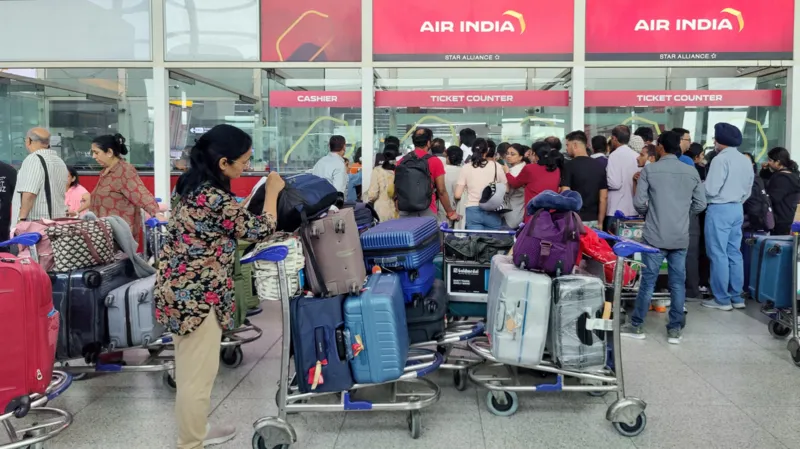 |
| Flights that would have gone over the affected region have been diverted, causing delays (Image: Reuters) |





 Posts
Posts


0 Comments