 |
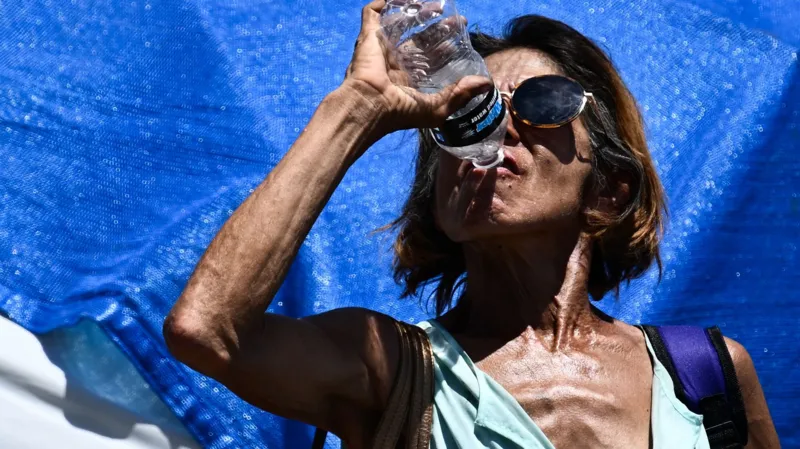
| Temperatures could exceed 100F (38C) as soon as Wednesday (file photo of AFP) |
This week, a significant and unusually early heatwave is forming in the southwestern United States, bringing temperatures closer to mid-March than early summer. The National Weather Service (NWS) predicts that temperatures in Phoenix, Arizona, could reach 100 degrees Fahrenheit (38 degrees Celsius) as early as Wednesday—the first time the city has experienced triple-digit temperatures in nearly four decades. California, Nevada, and Arizona are experiencing temperatures 20-30 degrees Fahrenheit above normal as a result of a powerful, slow-moving high-pressure system, which is also known as a heat dome. It is anticipated that the heat will continue for several days, with little cooling during the night adding to the strain. Millions are likely to be affected.
Many places, including typically cooler coastal areas, will see temperatures well above 90 degrees Fahrenheit, while inland and desert areas could reach 100 degrees Fahrenheit or even 110 degrees Fahrenheit, challenging previous
March records. The National Weather Service (NWS) has issued heat advisories for parts of California, including the
Bay Area and central coast, where temperatures could reach around 90 degrees Fahrenheit. Residents in the affected areas are being warned to check on the elderly and other at-risk groups as temperatures climb, and to schedule events around peak heat.
"Extreme early-season heat coupled with high tourism rates will make this heat very dangerous, particularly for those not acclimated to the heat and/or traveling from cooler climates," the Las Vegas, Nevada NWS office said.
Forecasters warn that this could last for a long time, with only sporadic relief possible by the weekend or early next week. This raises questions about the effects on the environment and health in general. The heatwave also poses a serious threat to
California's already below-average snowpack, accelerating melt at a time when it would normally build or decline slowly.
Snow in the Sierra Nevada is likely to melt weeks earlier than usual due to temperatures that are significantly above average. This will reduce the amount of water that can be gradually released into reservoirs later in the year. Since snowpack provides roughly a third of the state's water, this rapid runoff increases the likelihood of
summer water shortages and causes landscapes to dry out earlier, increasing the likelihood of a
longer and more intense wildfire season. Wildfire risk remains relatively low across much of the Southwest despite the heatwave, as lighter winds in these regions are expected to limit the rapid spread of fires.
When wind speeds are low, high temperatures and dry conditions are not enough to cause large, fast-moving fires, so many communities have a small buffer. But things are different further east, especially from the
Rockies to the High Plains, where dry air, dry vegetation, and constant breezes could make it much easier for wildfires to start and spread. The recent blizzards and icy conditions in the Midwest and Great Lakes, as well as the threat of
severe thunderstorms and tornadoes for the East Coast, have contributed to the current heatwave. It is anticipated that much of the United States will experience temperatures above average by the end of the week and into the following week.
Source: BBC


 Posts
Posts


0 Comments