
 |
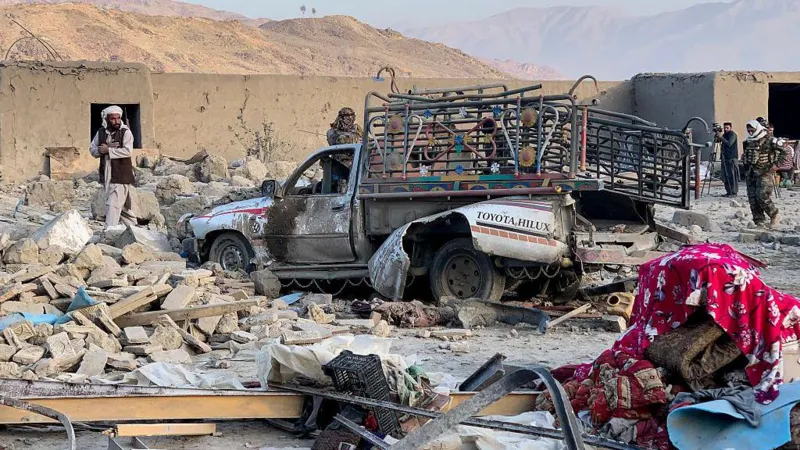
| This latest escalation comes days after Pakistan carried out air strikes inside Afghanistan following suicide blasts on its soil (file photo)(image: Getty Image) |
On Thursday night, the reverberating sound of an explosion jolted District 6 residents of Kabul to their senses. They rushed out in the street and heard jets flying overhead.
Pakistan carried out airstrikes in Afghanistan, including Kabul, the country's capital, on a night that saw a significant uptick in violence between the two countries. Paktia and Kandahar provinces, the Taliban's birthplace and stronghold, were the other areas targeted. Despite the fact that hostilities between the two sides have been going on for months, it depends on who you ask who started the fighting. The Taliban government in Afghanistan claimed earlier in the night that it had launched a significant ground operation against Pakistani military positions near the border, claiming to have captured several posts and killed Pakistani soldiers. "Pakistani military elements carried out an incursion into Afghan territory, violated Afghan sovereignty, and caused the deaths of several civilians, including women and children," the Taliban government claims. They were referring to an earlier round of Pakistani airstrikes carried out less than a week ago - on the night of 21 February - targeting the eastern Nangarhar and Paktika provinces. The United Nations claims to have credible reports that those strikes resulted in the deaths of 13 Afghan civilians.
Read More: What we know after latest escalation in Pakistan-Afghanistan tensions
Islamabad views things differently. It claims that its airstrikes have not targeted civilians but rather militant hideouts in Afghanistan, specifically those of the Tehreek-i-Taliban Pakistan (TTP), also known as the Pakistani Taliban or Fitna al Khawarij by Pakistan's government. Pakistan says it has "conclusive evidence" that TTP has been behind a series of attacks in the country, including the recent suicide bombing of a Shia mosque in Islamabad in which more than 30 people were killed. IS claimed to be behind the Islamabad attack, but Pakistan has said it has "conclusive evidence" the TTP is behind it.
Pakistan also alleges the attacks are being carried out at the behest of the TTP's Afghanistan-based leadership and handlers, who are being supported by the Taliban government.
Pakistan's actions in Afghanistan are "unprovoked," according to the Taliban government, which has repeatedly claimed that its territory is not being used to threaten the security of any country. The most recent major conflict between the two neighbors occurred in October 2025, when Pakistan launched airstrikes in Afghanistan and Afghanistan engaged in days of cross-border strikes. Talks took place in Doha and Istanbul thanks to the mediation provided by Qatar and Turkey. After that, there was a shaky ceasefire, but the talks didn't result in a truce between the two sides. Both countries blamed the other for not engaging seriously in diplomacy.
Pakistan has a significant military advantage. It has hundreds of tanks and aircraft and cutting-edge defense technology, making it a significant military power.
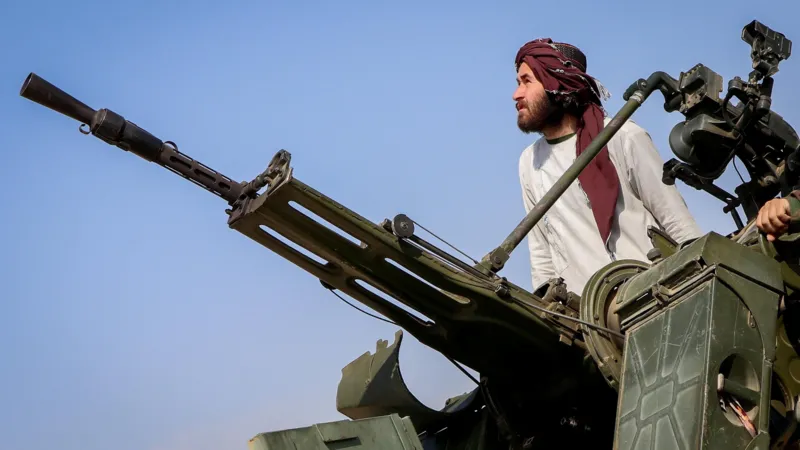 |
| The Taliban do not have the upper hand militarily, but are experienced in guerrilla and unconventional warfare (Image: Reuters) |


 Posts
Posts


0 Comments