
 |
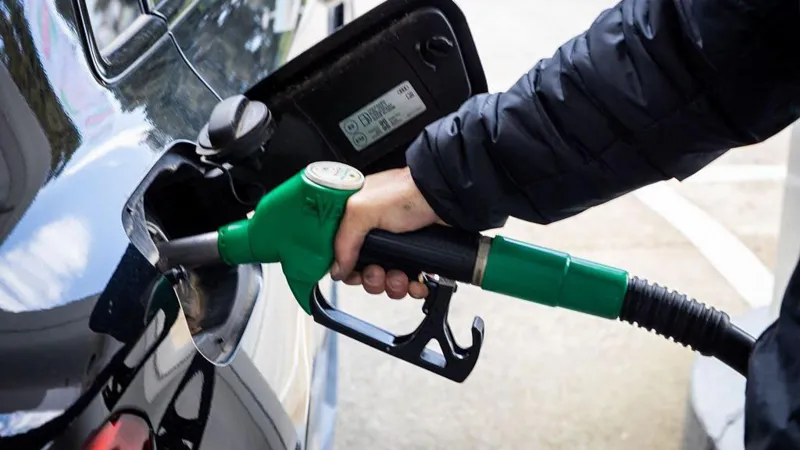
| After Trump claims that talks to end the war have been held, oil prices fall and shares rise(Image: getty Images) |
Oil prices plunged and stock markets rebounded after Donald Trump said the US and Iran had held talks over halting the conflict in the Middle East.
The price of Brent crude initially fell in response to the statement made by the US president on Truth Social, while shares in both the US and Europe rose. Trump claimed that the United States and Iran had discussed a "COMPLETE" solution and that he would delay strikes on Iranian power plants for five days. However, Iranian state-affiliated media reported that Tehran had not spoken with the United States. Trump stated on Saturday that if the crucial Strait of Hormuz shipping route was not reopened within 48 hours, he would "obliterate" Iranian power plants. Iran had stated that as a response, it would target important infrastructure in the region.
Read More: Energy bills rise 'inescapable' if oil prices stay high, says British Gas boss
Financial markets had been shaken by the comments made over the weekend, raising concerns that the US-Israeli conflict with Iran would last a long time. The price of Brent reached $113 a barrel on Monday, but it fell immediately following Trump's most recent remarks. It fell to a low of $96 a barrel, before rebounding to $103.
Stocks rose while oil fell. After being down more than 2% on Monday, the FTSE 100 index in London was up 0.3 percent. The Dax index in Germany also rebounded, rising 1.7 percent, while the Cac in France gained 1.2 percent. The S&P 500 index and the Dow Jones opened about 2% higher in the US. Stocks in Asia, which closed before Trump's latest comments, had seen heavy falls with Japan's Nikkei index dropping 3.5% and South Korea's Kospi down 6.5%.
Japan and South Korea have been particularly affected by the conflict, as they are heavily dependent on oil and gas that would normally pass through the Strait of Hormuz, one of the world's busiest oil shipping channels.
Iran has effectively blocked the waterway ever since the war began on February 28. The conflict has pushed up global fuel prices, as about 20% of the world's oil and liquefied natural gas usually pass through the strait. Trump stated in a post on Truth Social that the United States and Iran had "VERY GOOD AND PRODUCTIVE" talks over "A COMPLETE AND TOTAL RESOLUTION OF OUR HOSTILITIES" over the past two days. He added he had told the Department of War to postpone any military strikes "AGAINST IRANIAN POWER PLANTS AND ENERGY INFRASTRUCTURE FOR A FIVE DAY PERIOD, SUBJECT TO THE SUCCESS OF THE ONGOING MEETINGS AND DISCUSSIONS".
"We deny what US President Donald Trump said regarding negotiations taking place between the United States of America and the Islamic Republic of Iran," however, Iran's foreign ministry issued a statement afterward. Susannah Streeter, chief investment strategist at Wealth Club, said Trump's comments had taken markets on a "wild ride".
"Clinging to President Trump's words is fraught with risks, given how hopes have already been raised and then been dashed over the last four weeks," she added. She also noted that with oil still above $100 a barrel, "energy costs will remain super-painful for companies and consumers".
"It's clear that traders are still expecting significantly lower flows from the Middle East, even if a ceasefire is agreed, given the disruption to supply routes and the damage to facilities."
Already, the conflict has caused fuel shortages and pushed up prices by disrupting global energy supplies. Earlier on Monday, the head of the International Energy Agency (IEA), Fatih Birol, had warned the war could see the world facing its worst energy crisis in decades.
Birol made a comparison between the current energy crisis and those of the 1970s, as well as the effects of Russia's invasion of Ukraine in 2022. "This crisis as things stand is now two oil crises and one gas crash put all together," he said, speaking at an event in Australia.
There are concerns that domestic energy bills in the UK will significantly rise later this year due to the sharp rise in oil and gas prices since the conflict began. On Sunday, British Prime Minister Sir Keir Starmer spoke with President Trump about the necessity of reopening the Strait of Hormuz. Later on Monday, Sir Keir is set to chair a meeting of the government's emergency Cobra committee, which will be attended by Bank of England governor Andrew Bailey.
It is anticipated that the meeting, which was scheduled before Trump's most recent remarks, will discuss the impact of the war on living costs and the resilience of supply chains, as well as energy security. UK government borrowing costs have been rising rapidly over the past few days, and on Friday they hit their highest level since the 2008 financial crisis.
On Monday, the yield - or interest rate - on government borrowing over a 10-year period rose to 5.12% at one point, before dropping to about 4.9% after Trump's comments.
Source: BBC


 Posts
Posts


0 Comments