
 |
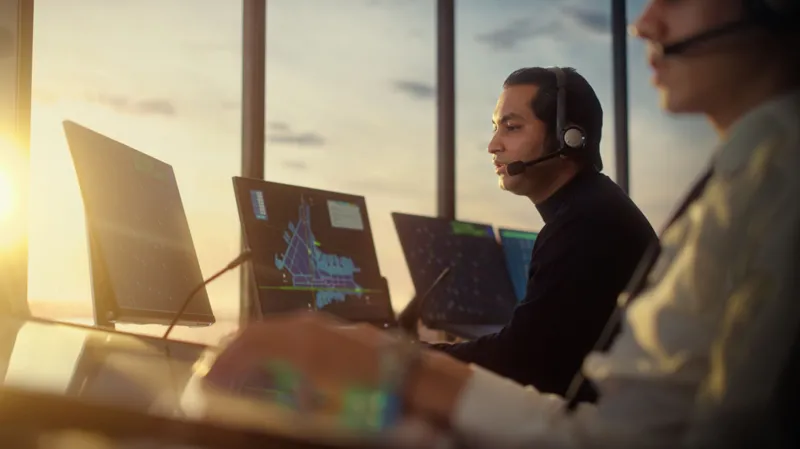
| How passenger planes continue to fly during wartime (Image: Getty Images) |
Air traffic controllers have been guiding passenger jets through safer but congested airspace on the edge of the war for the past fortnight as missiles and drones have whistled through the skies above Iran and the Gulf. A glance at a flight tracker map reveals the increased activity in Georgia and Egypt. Each controller coordinates with coworkers to determine which planes are entering and exiting their airspace while working side by side on a distinct section of the map. A single controller might be in charge of six aircraft at once on a typical day. But if a war is going on, it could be twice as much.
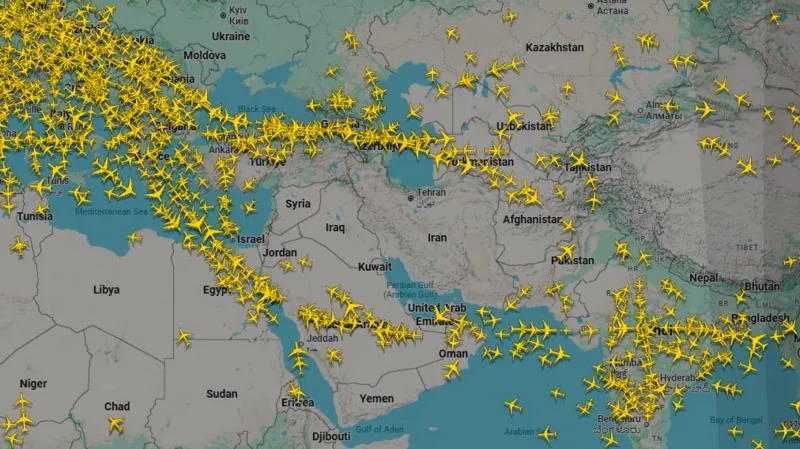 |
| Passengers plane flyingway on FlyRadar (Image: Getty FlyRadar24) |
"The brain can only give that amount of concentration at that level of intensity for 20-30 minutes," says retired air traffic controller, Brian Roche.
He worked there for 18 years, first for the Royal Air Force in a number of countries and then for passenger jets in London, where he was a member of a team that dealt with emergency distress calls.
In order to prevent controllers from becoming overwhelmed during busy times, more controllers are brought in to manage the greater volume of aircraft in particular areas. Additionally, controllers are rotated more frequently. Usually shifts would be 45-60 minutes long with 20-30 minutes off, says Roche. But during times of conflict they will likely only do a 20-minute stint and then break for the same length of time.
"The controllers at the moment are working unbelievable shifts, [dealing with] unbelievable amounts of traffic," he says.
The downing of a Malaysia Airlines MH17 flight in 2014 by a Russian-made missile in eastern Ukraine, which killed all 298 people on board, highlights how conflict can impact the route of passenger planes.
At the time, Ukraine was a relatively low-level conflict zone, but fighting had recently expanded into the air and in the preceding months a number of military planes had been shot down. It is also a scenario no-one wants repeated.
After their refueling aircraft crashed in western Iraq last week, six American crew members died. One of two aircraft involved in the incident, the tanker, had been a part of ongoing US operations against Iran. The second landed safely. The US Central Command confirmed that it was not caused by friendly or hostile fire. Controllers inform pilots about where they need to go, how much fuel they have, and which airports can accommodate their type of aircraft when airspace suddenly closes or becomes congested. Controllers must also ensure all planes, which come in an array of sizes, are safely separated both vertically and horizontally because large passenger jets cause greater turbulence and instability for the aircraft around them.
This means that smaller jets need to be steered away and given more space, while a smaller business jet might have to change its location entirely.
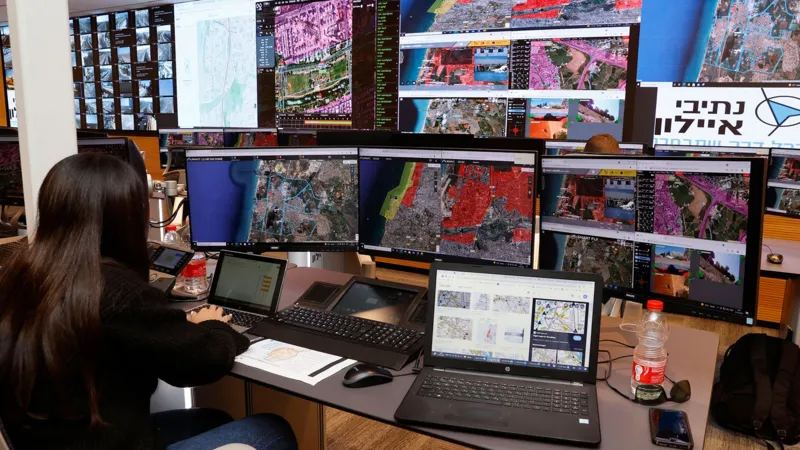 |
| Air traffic controllers carrying out a demonstration at the Drone Air Control Centre in Tel Aviv(Image: AFP) |
But sudden closures are quite rare, says John, who has been a pilot for more than 20 years. Because he still works as a pilot and flies routes over the Middle East, he did not want to reveal his real name. He says most airlines plan in advance for when they want to avoid a particular airspace – whether it be due to bad weather or war.
"In this case, we all knew that there was something brewing in the Middle East," John says. "It was only a question of when, not if." Pilots will try to carry as much fuel as possible in the event that they need to fly back to their departure location or divert to an airport that is further away from their intended destination. In addition, they will be aware of alternative flight plans in order to avoid conflicts. John says, "These are perfectly normal, trained, controlled events." He also wanted to emphasize how closely pilots and controllers follow procedures to prevent busy airspace from becoming unmanageable. "It is not a chaotic situation like a traffic jam." John claims that he and other pilots strive to convey that orderly calm to their passengers and cabin crew.
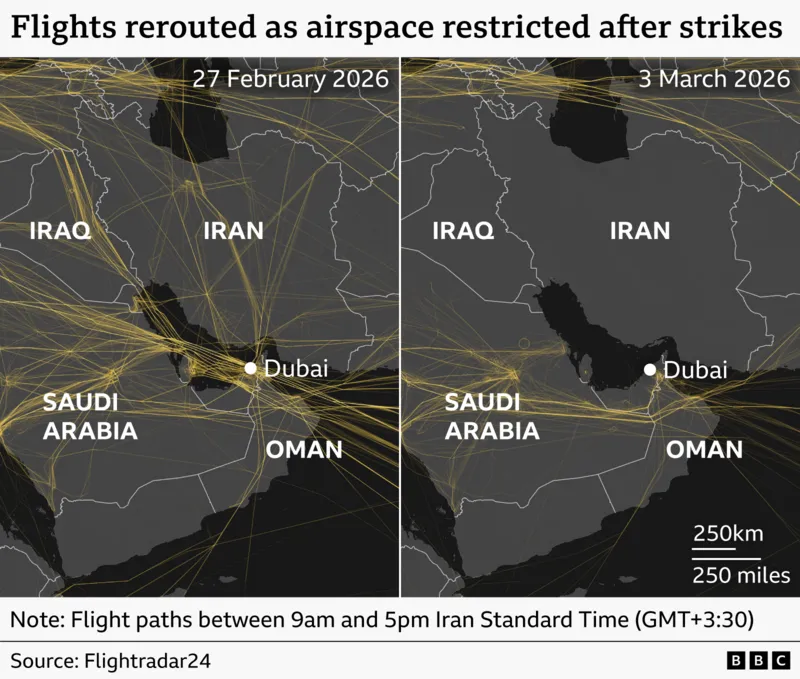
On long-haul flights, Hannah assists in leading a cabin crew. Because she is not authorized to speak on behalf of her airline, we are not using her real name. The routes Hannah flies often pass through the Middle East. She says that conflicts show how important her team is on board, especially for nervous or angry passengers. According to her, "Our work goes beyond the cliché that all we do for a living is ask customers whether they want chicken or beef for dinner." "Serving is what we do when everything else is under control," she said. "So many people forget the safety aspects of our role." According to Hannah, both pilots and cabin crew can struggle to achieve a healthy work-life balance due to diverted flight plans and disrupted schedules. Because they are unable to fly directly over Iran, airlines like hers have recently increased the number of stops on their routes. However, she believes that such workloads are an integral part of her job, which she describes as "a lifestyle and a passion." She asserts, "As cabin crew, we all feel like we are a big family." "By wings we are one."
Source: BBC


 Posts
Posts


0 Comments