
 |
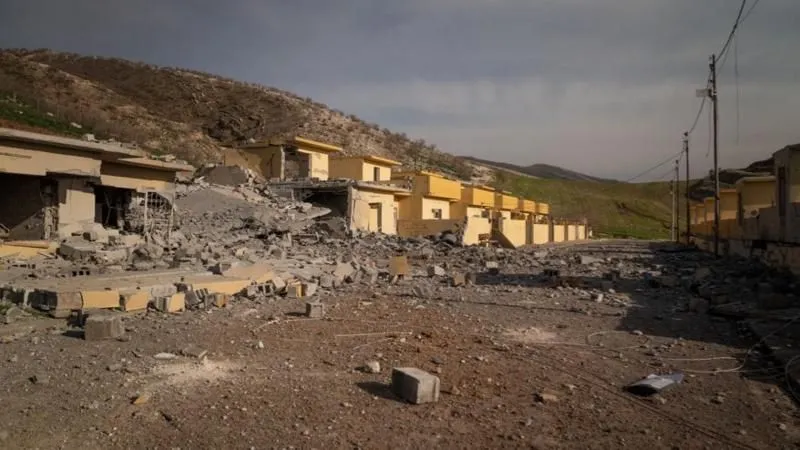
| Iraqi Kurdish forces' headquarters are a target for Iran.(Image:Mattew Goddard/bbc) |
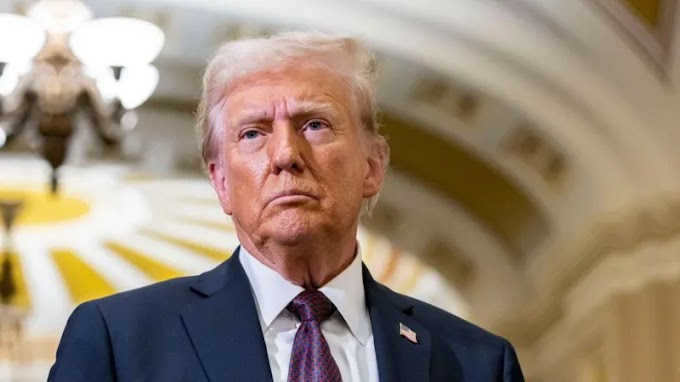
In an effort to intensify its attacks on Kurdish areas in both Iran and Iraq, the Iranian military has stated that it has targeted the headquarters of Iranian Kurdish forces in northern Iraq. The military claimed that it fired three missiles at "Kurdish groups opposed to the [Islamic] revolution in Iraqi Kurdistan." The BBC has confirmed that the strikes on Tuesday and Wednesday resulted in one fatality and three injuries. As US and Israeli strikes continue, reports suggest that US President Donald Trump wants Iranian Kurdish groups in Iraq to join the fight against Iran. As a result, Tehran is intensifying its attacks on Iranian Kurdish groups in Iraq. There have been reports that some of the Kurdish Iranian opposition parties in Iraq have entered Iran.
"This is incorrect. "Do not believe it," said Kurdistan Freedom Party (PAK) member Hanna Hussein Yazdan Pana. "Not a single fighter from the Peshmerga has moved. Everyone moves together. She stated that six coalition-forming Kurdish opposition groups were coordinating their plans and needed the Americans to clear the way for a move. She told the BBC that this week nothing would happen. It is not a matter of hours or days. If the air above us is not cleaned, we cannot move. We must see the destruction of Iran's security forces' weapons depots. If not, it would be suicide." In addition, Pana proposed establishing a no-fly zone to safeguard Kurdish forces. She stated, "The Kalashnikov is our most advanced weapon, and the regime is very brutal." There has been a growing body of evidence indicating that Trump would like Kurdish troops to join the war as combatants. A report that the president is considering arming them has been denied by the White House.
Read More: First UK government flight departs Middle East after delay
The BBC went to the location of the Iranian attack on two distinct Kurdish opposition groups on Wednesday. Four Kurdish Peshmerga soldiers were injured when a ballistic missile struck one base around 11:00 local time (08:00 GMT) on Wednesday. Later, one of them died from his injuries. At the base, one building had been crushed, leaving behind a lot of twisted metal and rubble. A missile had also punctured a hole in the ground. The BBC witnessed the aftermath of a double drone strike on Tuesday at another base belonging to the Democratic Party of Iranian Kurdistan (KDPI), which was said to have injured one civilian. The BBC was told by a senior KDPI political leader that he thought the Kurds would fight in Iran soon, but he didn't give a specific date. There are rumors that Trump has spoken with the KDPI leader recently, but he declined to comment. A 25-year-old fighter with an AK-47 stated that he was eager to fight for freedom in Iran. He stated, "We are closer than ever."
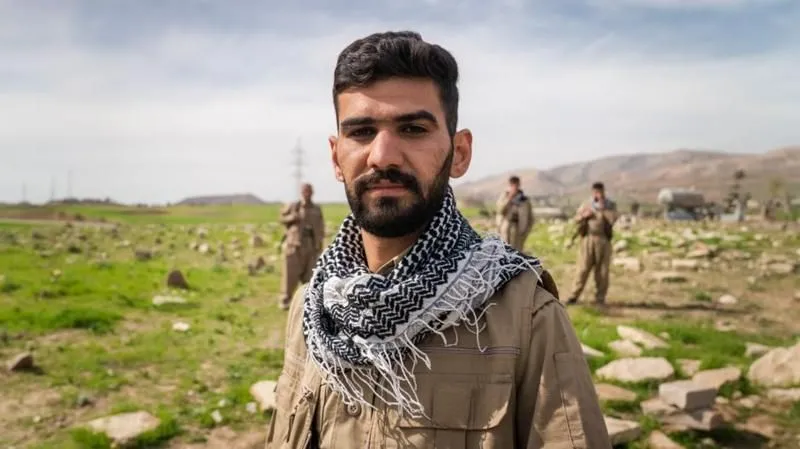 |
| KDPI fighter Hassan told the BBC he was eager to go to Iran to fight for freedom and for his nation (Image: Matthew Goddard/BBC) |
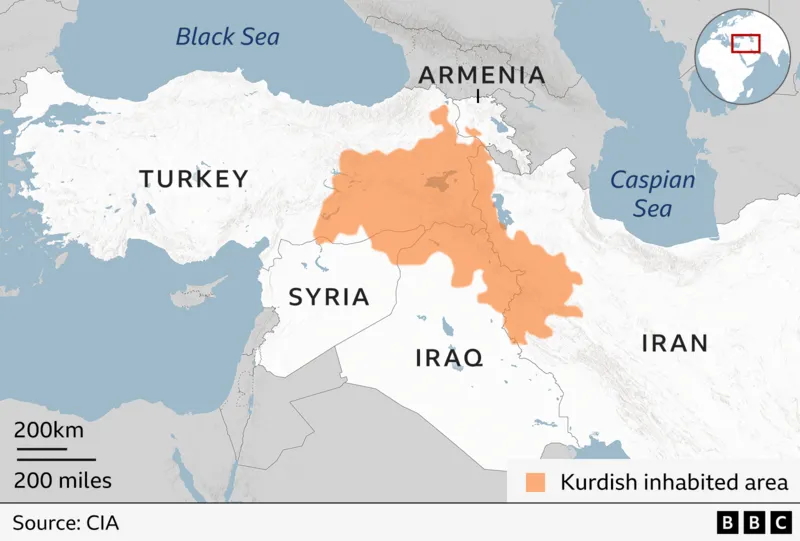
A former British ambassador to Tehran, Sir Simon Gass, described Iran as "a patchwork of different ethnicities" with a significant Persian minority and significant Kurds, Balochs, Arabs, and Azeris minorities. "It will be another problem that the regime needs to manage if the United States and Israel find a way to ignite some of those groups into an armed insurrection against the regime. "It will be extremely challenging," he told the Today program on BBC Radio 4. "Relatively lightly armed" and "under normal circumstances you would not expect them to be able to stand up to the strength of the Iranian armed forces," according to Gass, the Iranian Kurdish opposition fighters. The former diplomat went on to say, "However, if they are supported by special forces from other countries who can call in air support - that could be a different matter." A mountainous region that lies between Turkey, Iraq, Syria, Iran, and Armenia is home to over 30 million Kurds. Despite the fact that they are the fourth largest ethnic group in the Middle East, they have never been granted a state of their own. Kurds make up about 10% of Iran's 91 million people, most of whom are Sunni Muslims and live in the country's northwestern regions. Iran has a Shia Muslim majority. "Their social, political, and cultural rights have been repressed, as have their economic aspirations," Amnesty International stated of Iranian Kurds.




 Posts
Posts


0 Comments