
 |
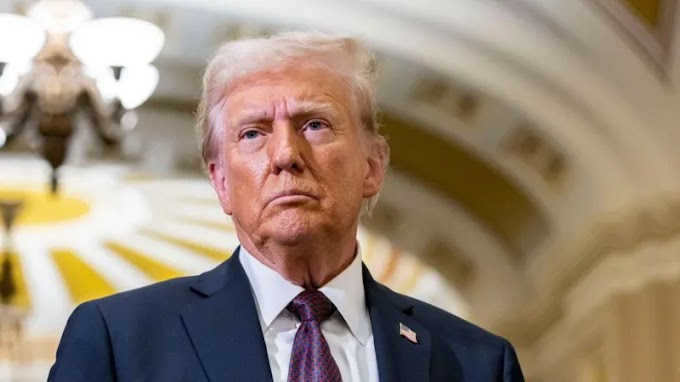
| Oil price falls as Trump talks up Iran peace negotiations (Image: Getty Images) |
Oil prices have fallen after US President Donald Trump said negotiations to end the war were progressing, while Iran said "non-hostile" vessels could pass through the Strait of Hormuz.
Brent crude fell by 5% to just under $100 (£74.62) a barrel on Wednesday.
READ MORE: Why the Strait of Hormuz matters so much in the Iran war
Trump said on Tuesday that talks to end the war were happening "now" and that the people the US were in discussions with "want to make a deal so badly" - a claim disputed by Iranian officials.
A spokesman for the Iranian Foreign Ministry stated on Tuesday that "no one can trust US diplomacy" in response to claims of such talks. "Can anyone believe their claims of diplomacy or mediation are credible when they started this war and continue attacking us?" Esmail Baghaei, the spokesperson, stated in an interview with India Today. As strikes between Israel and Iran continued to be exchanged, officials in Tehran declared on Monday that claims of talks between the US and Iran were "fake news." Trump claimed that Secretary of State Marco Rubio and Vice President JD Vance were involved in the talks to end the war. The president added that the US-Israeli strikes on Tehran have led to "regime change", repeating his claim that Iranian leaders have agreed that they will never have a nuclear weapon.
However, Tehran has previously denied being in touch with the United States, describing the claims as an attempt to manipulate markets. According to unnamed sources, the US has given Iran a 15-point plan, as reported by the New York Times, Reuters, and Channel 12 in Israel. According to Channel 12, one of the demands made by the United States is for the Strait of Hormuz to be opened and recognized as a free maritime zone. It also detailed what Iran would receive if it accepted the plan, including the removal of sanctions, according to Channel 12.
The BBC is working to verify the reports and has not seen the document. In a message posted by its mission to the United Nations (UN), Iran said "non-hostile vessels" will be allowed to pass through the Strait of Hormuz, provided they coordinate with "the competent Iranian authorities".
The statement came after some countries appeared to have negotiated safe passage for their vessels despite Tehran threatening to target ships that tried to use the channel.
The Iranian UN mission said on X that ships could have safe passage "provided that they neither participate in nor support acts of aggression against Iran and fully comply with the declared safety and security regulations".




 Posts
Posts


0 Comments