 |
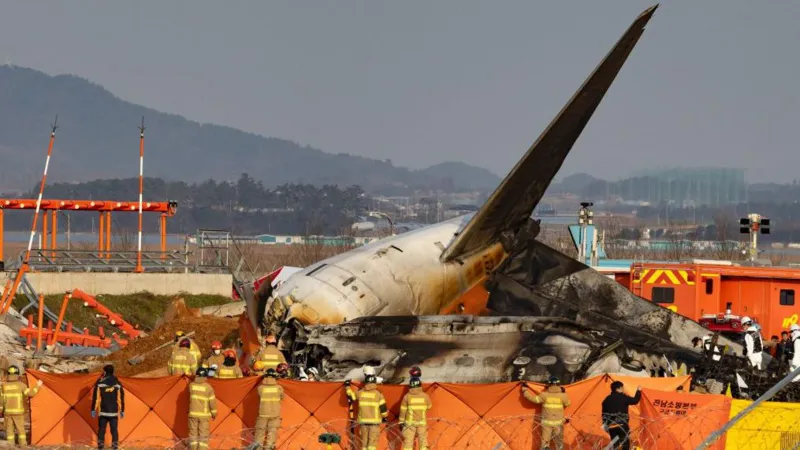
| The two survivors of the 2024 crash - both flight attendants - were seated in the tail section (Image: Getty Images) |
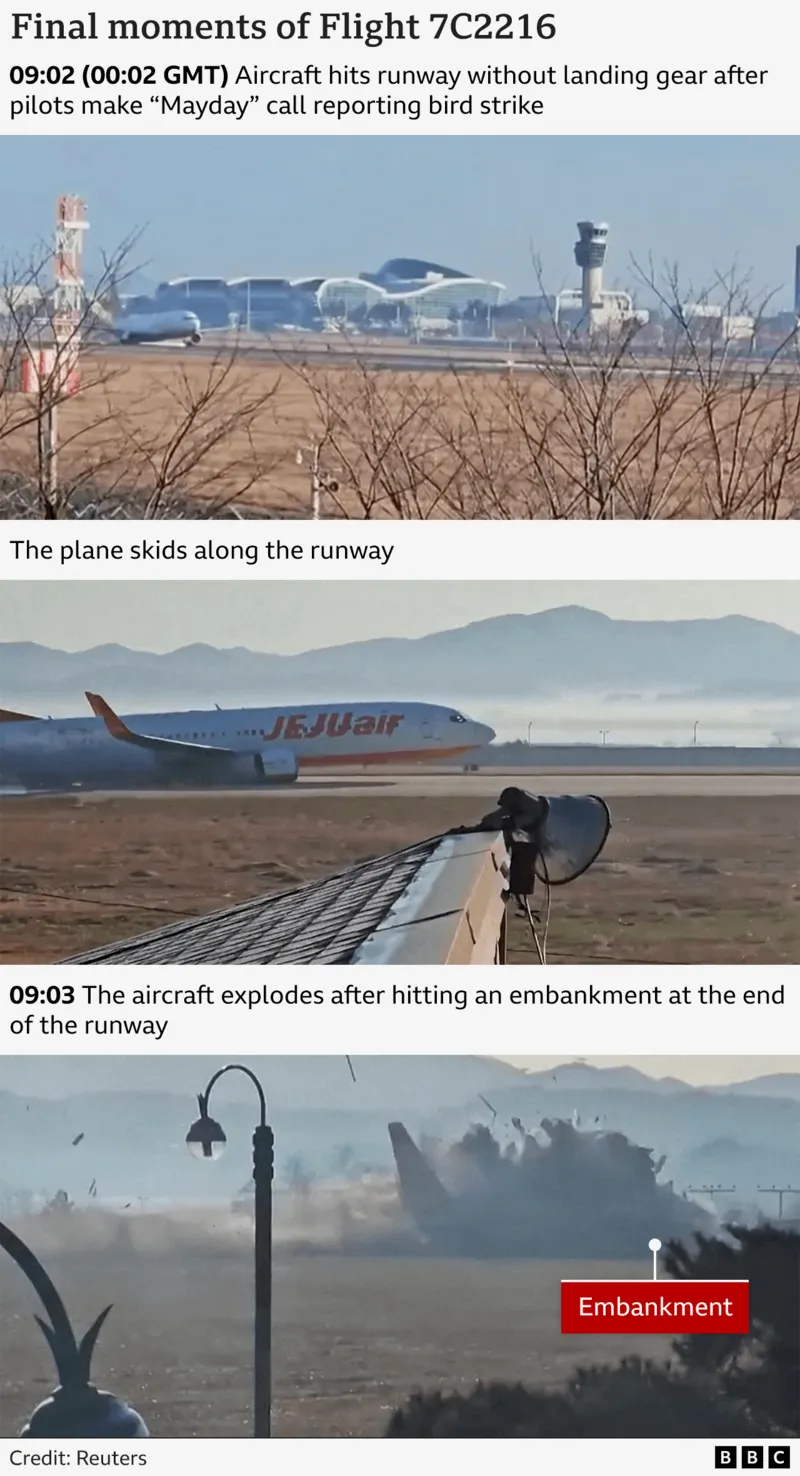
As concerns grow regarding the transport ministry's handling of the nation's deadliest aviation disaster, South Korean police have conducted a raid at its headquarters. On December 29, 2024, Jeju Air Flight 2216 overshot the runway at Muan International Airport and crashed into a concrete structure, killing all 181 passengers except two. Initial investigations found that the Boeing 737-800 had encountered a bird strike and that the concrete mound exacerbated the number of casualties.
Read More: The US may move some of its anti-missile system - and it's sparking unease in South Korea
The incident sparked multiple investigations, the most recent of which was ordered by South Korea's President Lee Jae Myung on Thursday following the discovery of additional body parts and victim possessions.
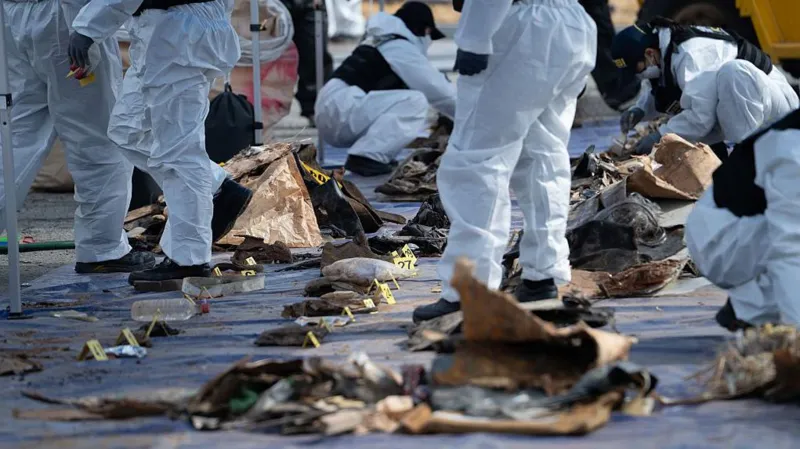 |
| Investigators have found body parts while examining debris from the aircraft (Image: getty images) |
Police searched the transport ministry's office in the central city of Sejong on Friday, looking for fresh leads on the cause of the crash and whether officials handled it properly, news agency Yonhap reported.
The raid was linked to the main government investigation into the crash. By the middle of the year, the results should be out. However, a number of other agencies and the South Korean parliament have also started other investigations that are running concurrently. Along with sacks of debris taken from the accident site, investigators have recently discovered body parts and victim possessions stored in sacks. The victims' families had been requesting a re-examination of the rubble removed from the site for months.
The latest discovery triggered public anger and prompted Lee to order an inquiry as to why the remains and belongings had not been detected earlier.
Additionally, Lee mandated disciplinary action against those accountable for human remains recovery delays. The victims' families have rejected the apology offered by the
Ministry of Land, Infrastructure, and Transport. A family representative stated, "We are appalled by the transport ministry's late and inadequate apology, which the families say is like killing the victims a second time."
Earlier this week, a separate inquiry by the audit board found that the concrete mound was built to cut costs.
The terrain at Muan International Airport is sloping. Authorities constructed the navigation antenna system into a concrete structure elevated above the runway rather than flattening the ground, which would have increased costs. The
localisers—the buildings that house the antenna system—should be made to break easily on impact, according to the
Board of Audit. Simulations have shown that all 181 on board the Jeju Air plane could have survived had the plane not hit the concrete mound, causing it to explode into a fireball.
The pilots were able to land the aircraft on its belly and slide it down the runway until it struck the concrete structure after a flock of
migratory ducks struck the engine. In seven airports, similar concrete structures used for navigation were demolished a month after the crash.
Source: BBC



 Posts
Posts


0 Comments