
 |
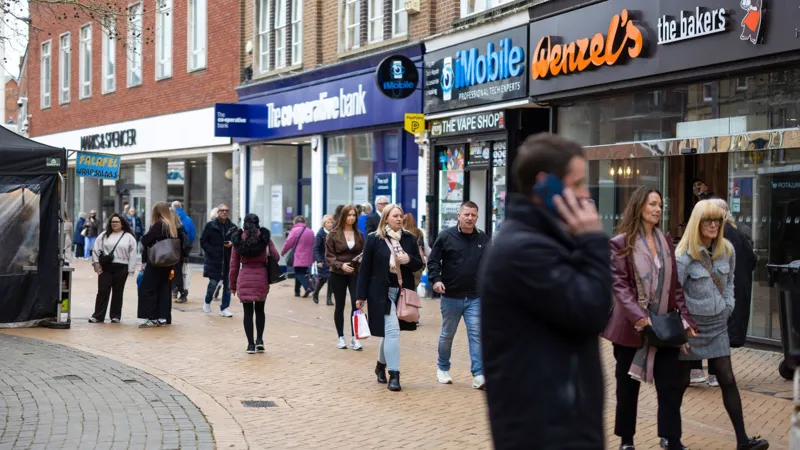
| Growth forecasts for the UK, as well as for countries around the world, have been downgraded due to the conflict (Image: Getty Images) |
An influential global policy group says that the Iran war is hurting growth the most in the UK of the major G20 economies. Economic growth in the UK this year is forecast to be 0.7%, the Organisation of Economic Co-operation and Development (OECD) said, down from its previous forecast of 1.2%. Inflation is also predicted to be higher than expected.
Due to the US-Israeli conflict with Iran, forecasts for many of the world's largest economies have been downgraded by the OECD. It warned that a prolonged conflict could cause "significant energy shortages" worldwide, and that crop yields will be affected and food prices will soar next year if the sharp rise in fertiliser prices continues. Wholesale oil and gas prices have soared since the war started, due to disrupted supply from the effective closure of the Strait of Hormuz, one of the world's busiest oil shipping channels, and damage to oil and gas plants in the Middle East.
Experts are concerned that a prolonged period of high energy costs will stifle growth, fuel inflation, and make it less likely that interest rates will be cut. The effects are already being felt at the pump, with UK drivers seeing higher petrol and diesel prices, and by heating oil users. As a result, mortgage lenders have raised interest rates and pulled hundreds of deals.
The OECD's global growth forecast for this year is unchanged at 2.9%, but it predicts inflation across the G20 countries will be 4%, sharply up from its previous forecast of 2.8%. The G20 includes the EU plus 19 other countries, collectively accounting for 85% of the world's economic output.
UK inflation is now forecast to hit 4% this year, up from the previous estimate of 2.5%.
The OECD then forecasts inflation will drop to 2.6% in 2027 - still up from its previous projection of 2.1%.
Among G7 countries, only the US is predicted to have higher inflation than the UK in the forecast, while only Italy is expected to see weaker growth. The United States, the United Kingdom, Canada, France, Germany, Italy, and Japan form the G7. In early March the UK government's official forecaster, the Office for Budget Responsibility (OBR), cut its expected growth rate for the UK this year to 1.1% from the 1.4% it predicted in last year's Budget.
But this forecast was made before the Iran war, which the OBR said could have a "very significant" impact on economies.
The UK would be affected by the Iran war, according to Chancellor Rachel Reeves, but "in an uncertain world we have the right economic plan."
"The decisions we have taken have put us in a better position to protect the country's finances and family finances from global instability," she said.
However, Sir Mel Stride, the shadow chancellor, referred to the downgrade as a "damning verdict on how vulnerable our economy is due to Labour." "Rachel Reeves can blame the world all she wants, but it's her choices that have weakened our economy at the worst possible moment," he added.
"A wake-up call that the government's anti-growth agenda is costing families," the Liberal Democrats said of the forecast.
The OECD's outlook aims to provide a guide for what is most likely to happen in the future; however, given the numerous factors that influence economic growth, forecasts can be wrong and change. The organisation said its predictions depend on the assumption that the current energy market disruption eases, with oil, gas and fertiliser prices falling from summer onwards.
It stated that "should be timely, well-targeted on households most in need and viable firms, preserve incentives to lower energy use and have clear expiry mechanisms" when governments take measures to protect households from rising energy costs.
Earlier this week Reeves said the government planned to help "those who need it most" if energy bills spiral.
She said any package would be constrained by the government's borrowing rules and its wish to keep inflation and interest rates "as low as possible".
The OECD said policies that improve domestic energy use and lower reliance on imported fossil fuels over the medium term should be a priority.
M&S CEO Stuart Machin stated that "policy costs" on the company's energy bill had "skyrocketed" in recent years and were unsustainable for businesses at the time of the forecast. "These are the tariffs that government place on our bills to fund their policies," he said on LinkedIn, and "have nothing to do with the price of oil and gas".
Earlier on Monday, Next, a clothing retailer in the United Kingdom, stated that if the Iran war lasts for three months, it would likely incur additional costs totaling £15 million, such as fuel and air freight. It stated that these have been compensated for by savings elsewhere, but that "we will begin to pass costs through as higher pricing – but for today that remains a contingency not a plan" if the conflict continues for more than three months.
Source: BBC




 Posts
Posts


0 Comments