
 |
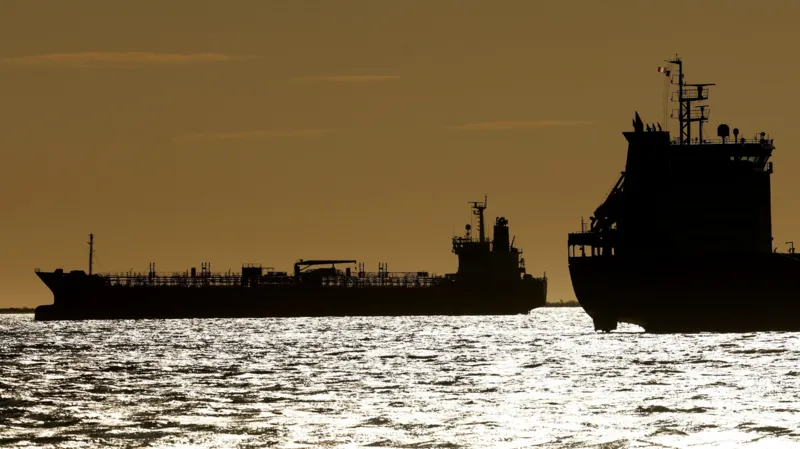
| US lifts sanctions on some Iranian oil as energy prices soar(Image: EPA) |
The US has lifted sanctions on some Iranian oil, as it scrambles to contain the impact of its war in Iran on energy markets.
Treasury Secretary Scott Bessent announced the issuing of a narrowly tailored, short-term authorisation permitting the sale of Iranian oil currently stranded at sea.
The move marks a stunning reversal of longstanding American policy - and one with highly uncertain pay-off.
Since the start of the war, prices for gas and oil have skyrocketed. The price of Brent crude oil is holding around $112 a barrel, up 53% on the past year. Before the financial crisis, the price of UK gas was 80p per therm, but it is now about 151p per therm.
Read More: US hints at easing Iran oil curbs - what it means for India
Experts said it was likely to have a limited effect on prices, and could boost funds going to the Iranian regime that the US is attacking.
Bessent said on Friday that the permit could be used to sell Iranian-sourced crude oil and other petroleum products that were currently loaded onto ships. The authorisation will last until 19 April, the treasury department added.
The move, according to the treasury secretary, would quickly bring 140 million barrels of oil to global markets. Prior to the war, China was the primary buyer of Iranian oil, purchasing barrels at a significant discount due to US and international sanctions. Bessent said in an interview with Fox Business on Thursday that a waiver of sales restrictions could help divert more of those supplies to countries like India, Japan, and Malaysia that need oil while making China pay "market price." Bessent wrote on X that the United States would "continue to maintain maximum pressure on Iran" and that Iran would have difficulty obtaining any revenue from the purchase of Iranian oil. However, on Thursday, David Tannenbaum, director of Blackstone Compliance Services, a maritime sanctions consulting firm, told the BBC that the concept was "bananas." "Essentially we're allowing Iran to sell oil, which could then be used to fund the war effort," he said.
Experts warned that the waiver would not significantly affect prices. On Thursday, an adjunct senior fellow at the think tank Center for a New American Security, Rachel Ziemba, stated, "I don't think it's a game changer and it raises a whole lot of questions." Ziemba stated that although it might be difficult to prevent in practice, she did not believe the United States would want money from oil sales to go to the Iranian government. "The US government is definitely in an every-barrel-counts situation because of the scale of the supply shock," she added. "Wherever they can," they say, "they're looking to find additional oil." Financial experts have also given the Trump administration's temporary reversal of sanctions on Iranian oil some positive feedback. The move was described as a "narrow action that should cause downward pressure on oil prices outside of China" and "should also reduce Iran's oil revenue and undercut its military" by David Malpass, the former president of the World Bank. "This is one in a number of steps last week (including the Jones Act waivers, opening pipelines, and building refineries) that will benefit the U.S. and add to long-term energy supplies," he added in his writing on X. The United States has already taken other steps to increase supply, suspending some sanctions on Russian oil last week and releasing millions of barrels of oil reserves. That second decision sparked significant blowback from leaders in Europe, who said it would strengthen President Vladimir Putin's regime and prolong the war in Ukraine.
The Strait of Hormuz, which runs along a portion of Iran's coast, typically transports about a fifth of the 100 million barrels of oil that the world consumes each day. But since the war began at the end of February, shipping in the channel has come to a halt.
Although some of the barrels that were being transported through the strait have been successfully rerouted, experts still believe that the war has wiped out approximately one tenth of the global supply from the market. Even if the conflict is resolved relatively quickly, damaging tit-for-tat attacks on a crucial gas field operated by Iran and Qatar raise the risk that capacity for providing fossil fuels could be restricted for years.
Source: BBC




 Posts
Posts


0 Comments