
 |
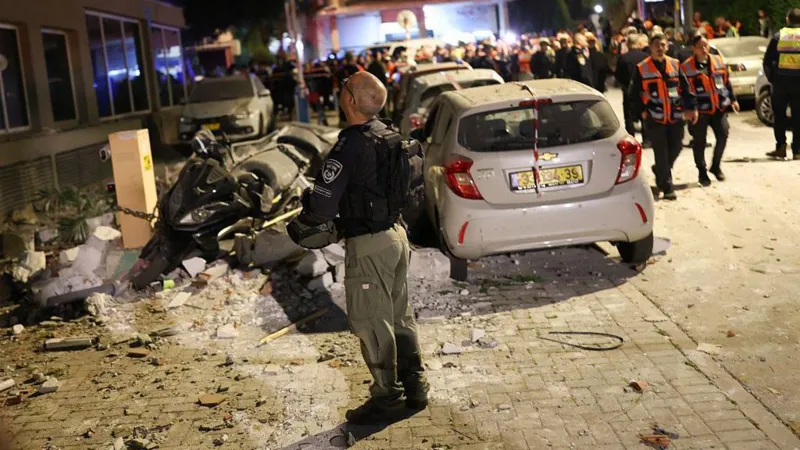
| Most people in the neighbourhood took cover in their safe rooms as the cluster bomb hit (Getty Images) |
An Iranian cluster bomb exploded in the minuscule living room of an elderly couple's apartment in central Israel late at night, killing both of them. The path of the bomb was still clearly mapped onto the ash-covered debris left behind. Broken concrete and metal rods were forced into their apartment's interior through a large hole in the ceiling. The explosion destroyed the front of the apartment, leaving it open to the street outside, as evidenced by shrapnel holes running along the back walls. Inside, a walking frame lay upended on the floor under the ash-covered furniture and rubble.
Read More: Why did US and Israel attack Iran and how long could the war last?
Sigal Amir, who lives next door and was hiding in her safe room when the explosion occurred, stated, "We heard three noisy interceptions, but on the fourth one, we knew it was our house." She stated, "There was a huge boom, and I felt a pain in my ear from the blast." "The neighbours live five metres from us – their door was blown off and their house was full of dust like snow."
She said that one of the couple had mobility issues, so they weren't in the shelter when the bomb went off.
Israel has seen few deaths as a result of Iran's daily missile attacks, with most of them intercepted by air defenses. However, even if the missile carrying them is shot down, cluster bombs are much more difficult to defend against because they disperse over a large area. As the war has gone on, Iran has shifted to using more of them.
During a visit to the location, Israeli military spokesman Lt Col Nadav Shoshani stated, "You can see the entry point of the rocket that flew all the way from Iran in a huge missile, and broke into dozens of pieces." "We had dozens of impact points like this in central Israel."
He stated that Israel had successfully intercepted the cluster bomb-carrying missiles, which each contained 20 to 80 munitions and were "very difficult to stop." Another alert of approaching missiles sounded while we were there. The neighbour, Sigal, beckoned us into her safe room.
There have been relatively few casualties from Iranian missiles in Israel. Fourteen people have so far been killed directly by strikes, nine of them in one attack in Bet Shemesh in the early days of the war.
Human Rights Activists News Agency (Hrana), based in the United States, reported on Tuesday that at least 1354 civilians and 1138 military personnel have been killed since the war began. The joint campaign against Iran by the United States and Israel is now in its 19th day and has destroyed military sites, oil facilities, and other infrastructure across the country. Israel's military says it has destroyed more than 70% of Iran's ballistic missile launchers, and that Iran's attacks against Israel are now weakening.
Meanwhile, Israel's population is resilient, and support for the war still appears to be strong.
However, some of this war-weary population is beginning to wonder when and how it will end due to the constant alarms that send Israelis into shelters throughout the day and night and the increasing use of cluster munitions.
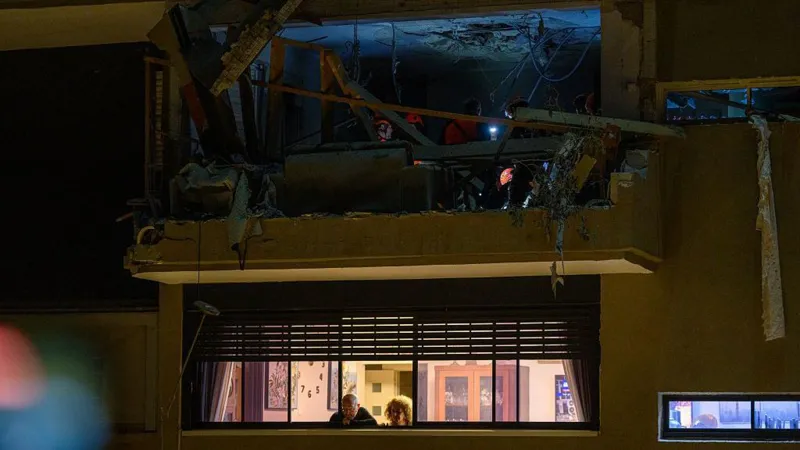 |
| Rescuers were seen combing through the wreckage of the cluster bomb strike overnight (Image: Getty Images) |
Source: BBC





 Posts
Posts


0 Comments