
 |
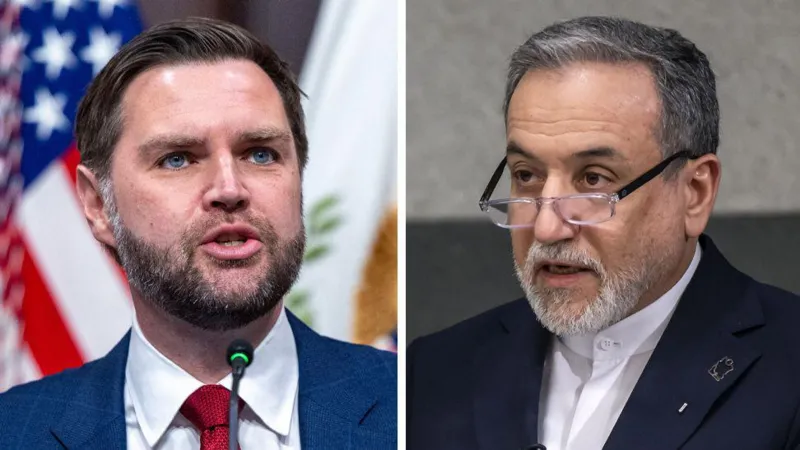
| US Vice-President JD Vance is to lead the US team during the talks, while reports suggest Iranian Foreign Minister Abbas Araghchi will co-lead Iran's delegation(Image: Reuters) |
The venue is ready, the guards are in place and the kerb along the approach road has received a fresh coat of yellow and black paint.
Pakistan is waiting. Pakistani officials, unlike many others, enjoy the trust of both sides and are making optimistic noises as they serve as hosts of crucial talks between the US and Iran. Vice-President JD Vance, who is leading the US delegation, is also sounding optimistic. Before departing the United States, he stated, "We're certainly willing to extend the open hand" if the Iranians were willing to negotiate in good faith. However, there was also a warning. "The negotiating team will discover that they are not that receptive if they are going to try to play us." It's fair to say that a whole mountain of obstacles lies ahead.
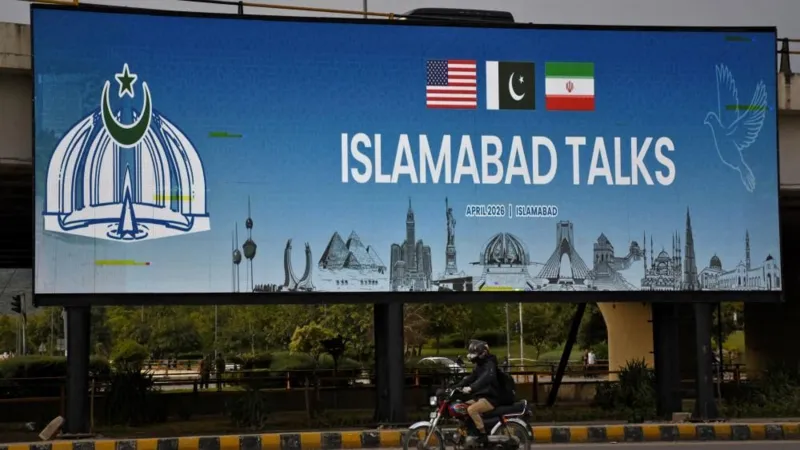 |
| A two-day holiday was declared in Pakistan's capital ahead of the talks(Image: Reuters) |
Lebanon
Israel's ongoing campaign against Iran's Lebanese ally, armed group Hezbollah, threatens to derail the talks before they've even started.
"The continuation of these actions will render negotiations meaningless," Iran's President Masoud Pezeshkian posted on X.
"The trigger is still in our hands. Iran will never abandon its brothers and sisters in Lebanon. Israel's Prime Minister Benjamin Netanyahu says there is "no ceasefire" when it comes to Hezbollah, but Israel's repeated warning to residents of Beirut's southern suburbs to evacuate has yet to result in any further action.
READ MORE: The high-stakes diplomacy that led to Pakistan hosting US-Iran peace talks
According to the US State Department, direct talks between Israel and Lebanon will take place in Washington next week, and US President Donald Trump has stated that Israel's actions in Lebanon will now be "a little more low key." It remains to be seen whether it will be low-key enough to please Iran.
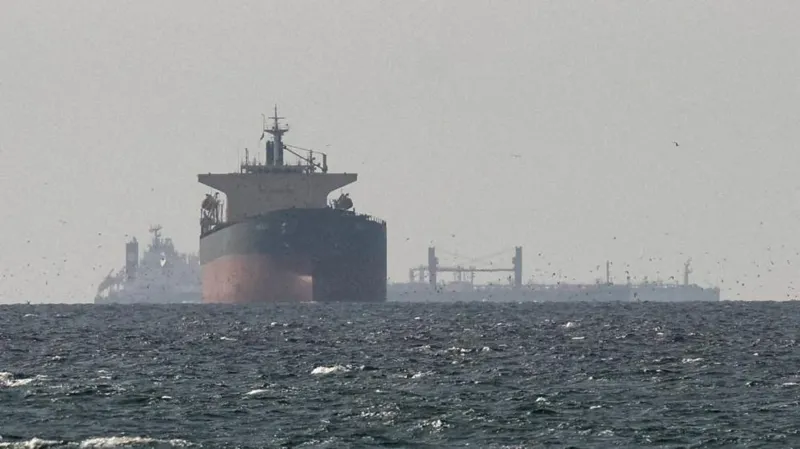 |
| Only a trickle of vessels have passed through the Strait since the ceasefire between the US and Iran began(Image: Reuters) |
Having achieved its chokehold on this vital waterway, Iran seems determined to formalise it, calling it sovereign Iranian water and talking about a new set of rules to govern what can and can't pass through.
It announced on Thursday that new transit routes would be built north of the two existing traffic separation channels. In a statement which played very consciously on existing fears among shipping companies, it said the new routes were necessary "to avoid the presence of various types of anti-ship mines in the main traffic zone".
Amid reports that some of the ships that have made it through in recent weeks have paid a $2m (£1.5m) toll, Trump has warned that Iran "better not be charging fees to tankers".
Nuclear
Iran's Regional Allies
Iran's network of regional allies and proxies – Hezbollah in Lebanon, the Houthis in Yemen, Hamas in Gaza and an assortment of militias in Iraq – has given Tehran regional clout, allowing Iran to exercise what is often called "forward defence" in its long-running disputes with Israel and the United States.
Since the start of the Gaza war in October 2023, the network Iran calls the "Axis of Resistance" has been under constant attack. One part of it, the regime of the former Syrian dictator Bashar al-Assad, no longer exists.
But Israel sees what it calls the "Axis of Evil" as representing an existential threat, which needs to be fully eradicated.
At a time when the Iranian economy is buckling, many Iranians would also like to see their government spending less on foreign adventurism and more on making their lives easier.
But there's little sign yet that Iran is ready to give up on its allies.


 Posts
Posts


0 Comments