
 |
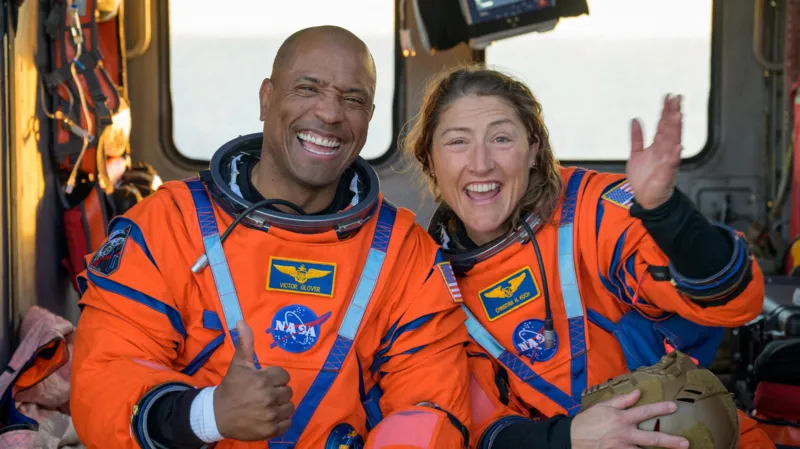
| Victor Glover and Christina Koch pictured after the crew's successful return to Earth(Image: NASA) |
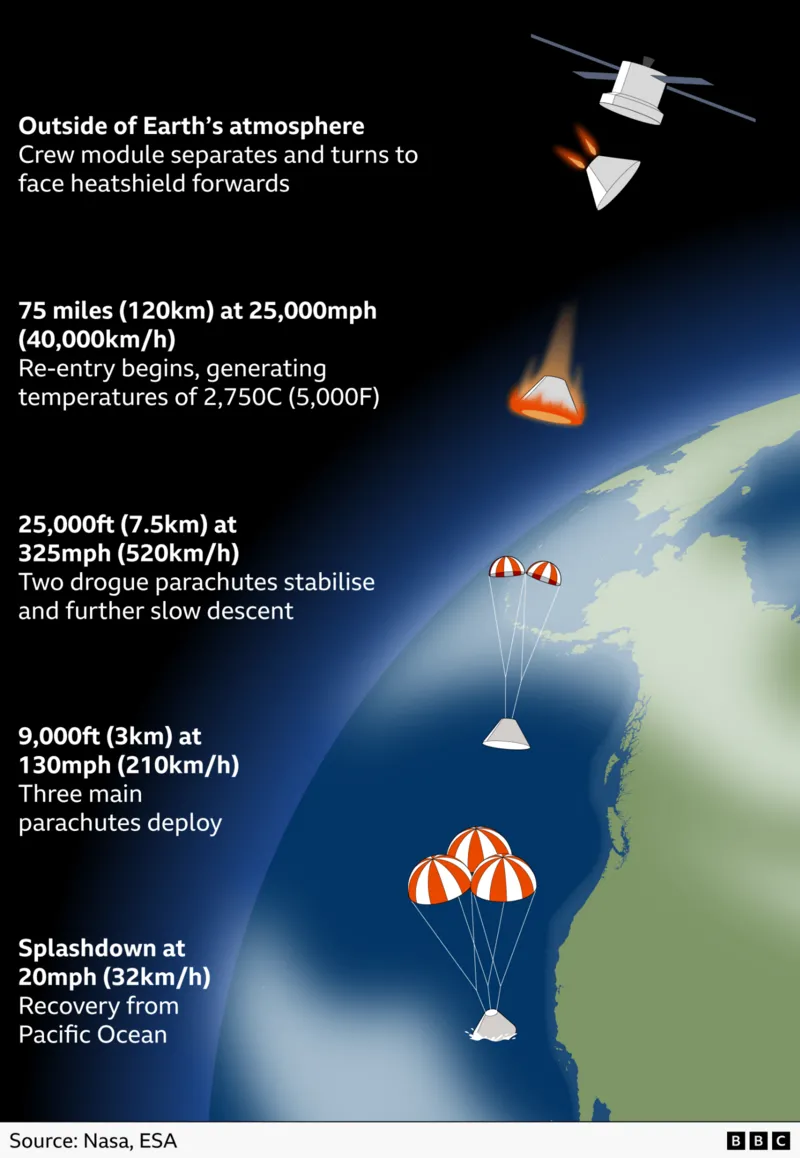
After a flawless return, the four astronauts on Nasa's Artemis II mission have safely splashed down in the Pacific Ocean. After a nine-day journey that took them farther from Earth than any humans have ever traveled, the crew is recuperating on a ship that is waiting for them. When their Orion spacecraft struck the upper atmosphere of Earth at more than 24,000 mph (38,600 km/h), its heatshield was exposed to temperatures half as hot as those on the Sun's surface. The Artemis program's next phase, which aims to land humans on the lunar surface and eventually establish a permanent base there, is now ready to begin. Their safe return clears the way. The extreme heat meant the capsule, which the astronauts named Integrity, lost contact with mission control in Houston for six minutes during the descent.
READ MORE: Nasa Apollo missions: Stories of the last Moon men
There were cheers when Commander Reid Wiseman's voice was heard saying: "Houston, Integrity here. We can clearly hear you." The mission's moment of maximum jeopardy had passed, and soon the spacecraft's red-and-white parachutes opened and sent the capsule sailing majestically through the sky.
"Beautiful main chutes!" Until the capsule made a flawless splashdown in the ocean, the Nasa commentary continued to exclaim enthusiastically.
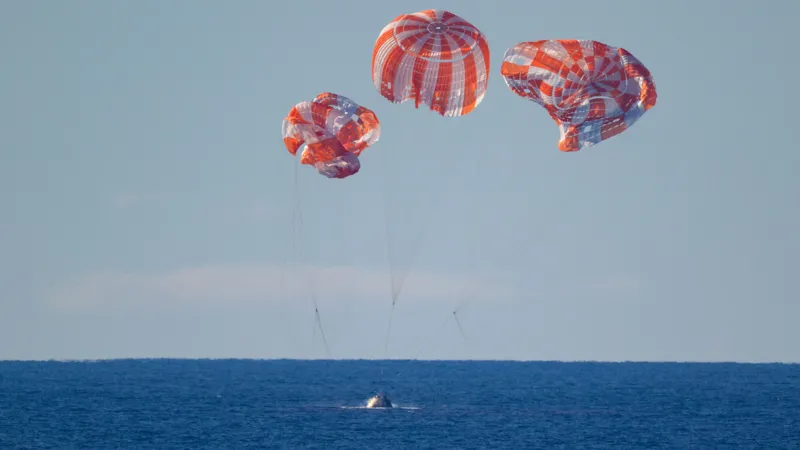 |
| The crew capsule, named Orion, splashed right on schedule in the Pacific Ocean, within a mile of its target(Image: Getty Images) |
At a press conference, Flight Director Rick Henfling said there had been a lot of anxiety but also a lot of confidence while bringing the Orion crew home.
"We all breathed a sigh of relief once the (capsule's) side hatch opened up," he said.
"The flight crew is healthy, happy, and prepared to return to Houston." The acting associate administrator at Nasa, Lori Glaze, was extremely kind to the astronauts. She said each of the four was impressive on its own, but she was proud of their "teamwork" and "camaraderie." "I think they really brought an amazing sense of what we were trying to achieve," she added.
"It was a mission for humanity as a whole."
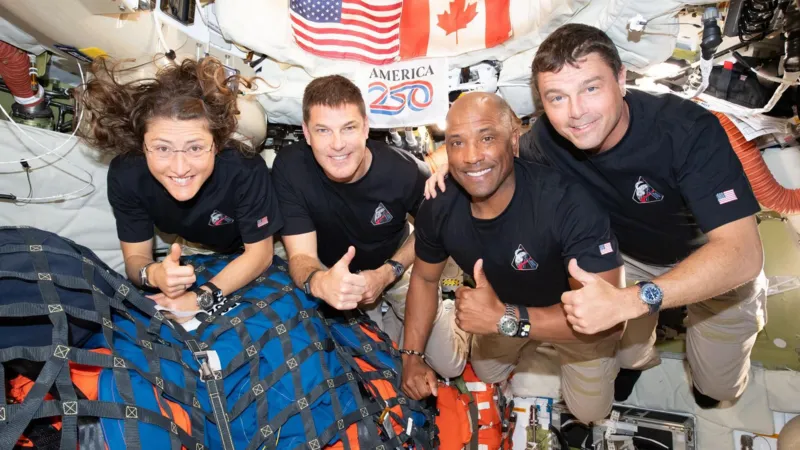 |
| Thumbs up from the history-making crew: L-R Christina Koch, Jeremy Hansen, Victor Glover and Reid Wiseman(Image: NASA) |
Concerns had been raised regarding the heatshield on the spacecraft, which shields the capsule from the extreme heat generated when it crashes into the atmosphere's thickest layer.
Even though temperatures on Artemis I remained within safe limits, the Orion capsule's shield sustained unexpected damage during the previous, uncrewed test flight of the Artemis system in 2022. This raised questions about how hot the interior might get on a crewed mission. Engineers responded by altering the spacecraft's reentry into the atmosphere in a manner that, according to simulations, would lessen the shield's thermal load. This mission was the first time that new return path has been tried in flight.
We'll have to wait for the full data to see how much the heating was reduced, but whatever the engineers decided clearly did its job of bringing the crew safely home.
Anit Kshatriya, an associate administrator at Nasa, compared the precision of that angle to the 250,000-mile journey to the Moon during the press conference. He stated, "The team hit it; that is not luck; 1,000 people doing their jobs."
The Artemis programme aims to step up Moon exploration, land humans on the Moon for the first time since 1972, set up a permanent lunar base and aim for a crewed mission to Mars.
The next flight, Artemis III, has been redesigned under Nasa's new administrator Jared Isaacman to be an Earth-orbital mission to test rendezvous and docking with the SpaceX and Blue Origin lunar landers, and is pencilled in for mid-2027.
The first actual Moon landing - Artemis IV - is targeted for 2028, though there are doubts that target is achievable.
Today's homecoming does not put boots on the Moon. But it demonstrates that the hardware works, that the trajectory holds, and that the people are able to take it. The foundation has been laid. But the hardest part is yet to come.
Source: BBC


 Posts
Posts


0 Comments