
 |
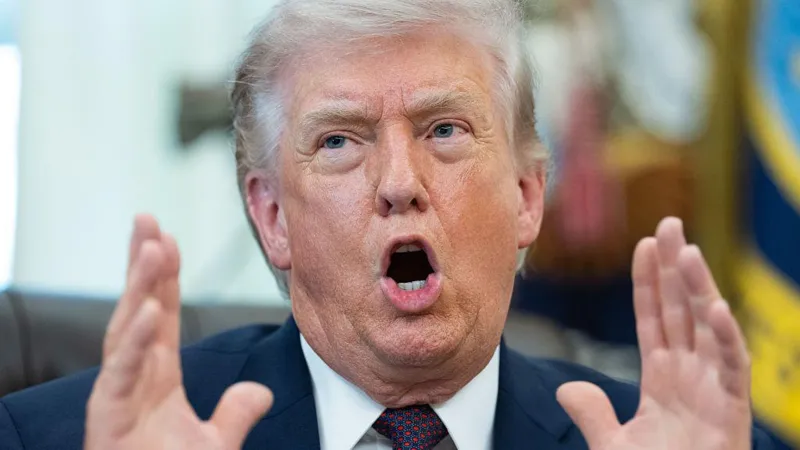
| On Tuesday, Trump said he believed the US would "leave" Iran soon, even without a deal. (Image: Getty Images) |
Millions of people around the world will watch Donald Trump's primetime update on the Iran war on Wednesday night. A lot of people will want to know how the war ends and what might happen next. Although the Trump administration has indicated that there may not be a significant announcement, many are pondering whether his hastily planned remarks will signal the beginning of the conflict's resolution or a bloody escalation. This ambiguity is, at least partly, by design. Trump often changes course or leaves his thinking a mystery to all but a small inner circle of supporters, which he has acknowledged leaves friend and foe alike wondering about his next move.
He is also aware that the speech is being given at a crucial point in his presidency, when domestic pressure to resolve the conflict is growing. Every poll has shown that Americans don't want a long conflict in Iran, especially if it involves the possibility of US soldiers being on Iranian soil. For instance, a poll conducted by Reuters this week found that two-thirds of Americans think the United States should work to quickly end its involvement in the war, even if the administration's stated military goals are not fully realized. Closer to home, many Americans are increasingly wary of higher prices at the petrol pump, which this week crossed the average of $4 a gallon for the first time in years.
This is a challenge for a president who, prior to the war, frequently cited lower gasoline prices as a sign of success.
READ MORE: What do Trump's latest comments on leaving Nato mean for the alliance?
Imran Bayoumi, a geostrategy expert with the Atlantic Council in Washington DC and former policy adviser to the defence department, told the BBC that the "deep domestic unpopularity" of the war, along with the economic fall-out, "both pose a problem ahead of midterm elections" if the conflict were to drag on.
In addition, it is likely that the president of the United States will present his perspective on how the conflict, or at least US involvement in it, will end. This has shifted repeatedly, from initial calls for an "unconditional" Iranian surrender to a potential negotiated agreement. He abruptly changed his mind just yesterday, stating that the war could end in "two to three" weeks even without a deal. This morning, he again seemed to shift, posting on Truth Social that Iran's "much less radicalised" president had asked the US for a ceasefire, but that the US would not consider it until the Strait of Hormuz is open.
Until then, Trump promised, the US will be "blasting Iran into oblivion, or as they say, back to the Stone Ages".
The speech, according to a White House official, will primarily focus on the operation's military successes, such as reducing Iran's navy, missile capabilities, and nuclear program. Trump is expected to reiterate that he believes the operation will be over in two or three weeks.




 Posts
Posts


0 Comments