
 |
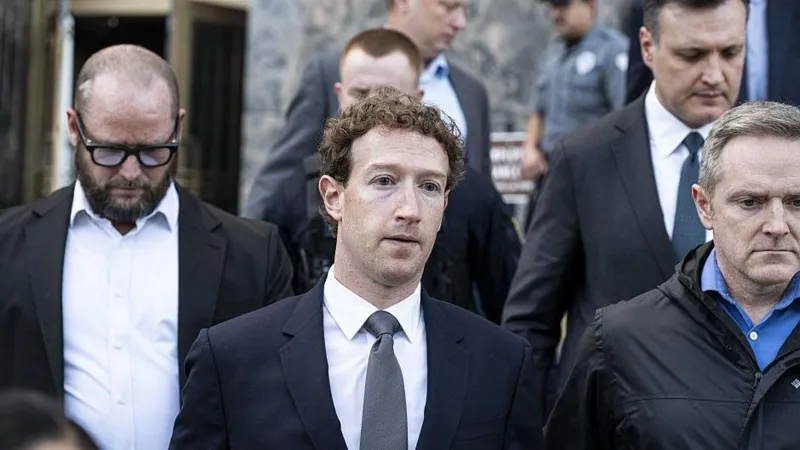
| Meta's boss Mark Zuckerberg appeared in court in February to defend the company, but it could now face further challenges over how it runs its platforms (Image: Getty Images) |
A jury in LA has delivered a damning verdict for two of the world's most popular digital platforms, Instagram and YouTube. It ruled that those apps were deliberately designed to be addictive and that their owners had failed to protect the children who used them. It's a sombre moment for Silicon Valley and the implications are global.
The tech giants in this case, Meta and Google, must now pay $6m (£4.5m) in damages to a young woman known as Kaley, the victim at the centre of this case. She claimed the platforms left her with body dysmorphia, depression and suicidal thoughts. Meta maintains that a single app cannot be solely responsible for a mental health crisis among teenagers, and both businesses intend to appeal. Google, meanwhile, says YouTube is not a social network. But for now the ruling means "the era of impunity is over" according to Dr Mary Franks, a law professor at George Washington University.
It is hard to overstate what a game-changing moment this court verdict is for social media. Whatever happens next, and there will undoubtedly be appeals and further legal processes, this is going to redefine the landscape. It could even be the beginning of the end of the social media era as we know it.
A 'big tobacco' moment?
The leaders in technology have a generally cordial relationship with US President Donald Trump, who has defended the industry. He has not yet rushed to their aid.

The platforms may also be forced to eliminate all features intended to keep users on their platforms. But engagement is big tech's lifeblood.
Lose all the techniques: the endless scrolling, the algorithmic recommendations, the auto play, and you're left with a very different, and arguably limited, social media experience.
The success of big platforms lies in their footfall - keeping large numbers of people online for as long as possible and coming back as often as possible, in order that they might be targeted with as many ads as possible. That's how the companies make money.
In several territories, including the UK, children do not contribute to this advertising machine but only since regulators intervened. However, today's children are tomorrow's adults and the ideal scenario for the tech companies is that they turn 18 as established users already.
Meta's original social network, Facebook, is frequently referred to as the "boomer platform" in a joking manner; however, statistics for 2025 indicate that nearly half of its users worldwide are aged 18 to 35.
More challenges to come
 |
| (Image Curtesy: Getty Images) |
The United Kingdom and other nations are considering the same thing, and this verdict unquestionably strengthens the case in favor of it. Banning the platforms from children is a no-brainer for some parents who have already struggled with it. Ellen Roome, a bereaved British mother, recently advised, "Just do it now." After her 14-year-old son Jools Sweeney's death in 2022, which she believes was caused by a botched online challenge, she has been advocating for changes to social media. Parliament, however, remains divided on what action to take.
The House of Lords and the House of Commons are currently playing "ping pong" over a proposed change to the Children's Schools and Wellbeing Bill that would give ministers a year to choose which platforms to ban for people under 16 years old. It's possible that the new verdict will bring politicians and peers together—not just in the UK. Will we one day reflect on this time period and wonder why we ever allowed children to run amok on social media?
Source: BBC


 Posts
Posts


0 Comments