 |
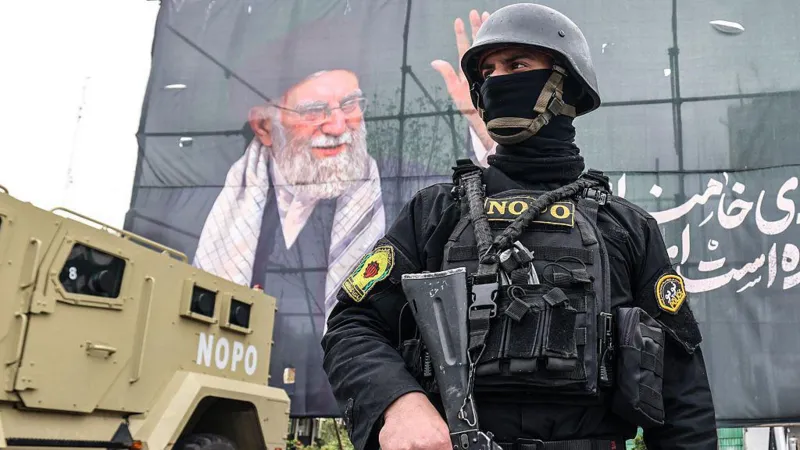
| Supreme Leader Ayatollah Ali Khamenei was killed at the beginning of the US-Israel war against Iran, launched on 28 February (Image: Getty Images) |
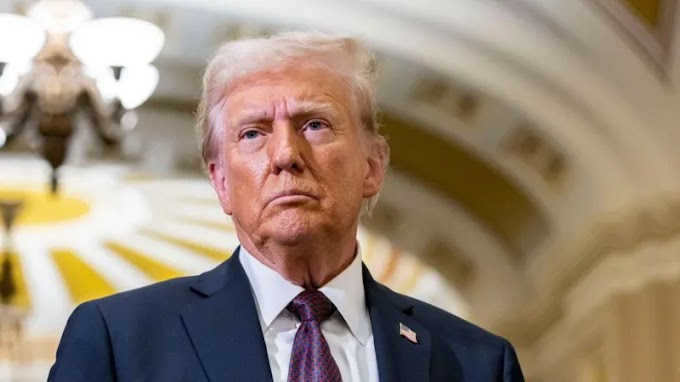
The purpose of Donald Trump's prime-time address on Wednesday evening about the war with Iran was to show control, but it also revealed a fundamental contradiction. The conflict appeared to be coming to an end when the US president declared Iran's military capabilities—its navy, air force, missile program, and nuclear enrichment infrastructure—largely destroyed. However, he added threats of further escalation in the coming weeks to that. The message that comes as a result is unclear: victory declared but not secured. The rhetoric sharpened further with his warning that Iran would be bombed "back to the stone ages, where they belong".
That comment has had a direct impact on Iran, igniting outrage on social media, including among supporters of the opposition who had previously viewed Trump as a potential change agent. Rather than encouraging internal pressure on the system, for
READ MORE: Why did US and Israel attack Iran and how long could the war last?
Trump has also backed up his claim that "regime change" has already occurred in Iran with the assassination of Supreme Leader Ayatollah Ali Khamenei and a slew of other high-ranking officials and commanders, resulting in a leadership that is "less radical and much more reasonable." There is little evidence to support this.
The structure of power in Tehran has not changed. Authority still flows from the supreme leader's office, though how much direct control is exercised in practice, particularly under current conditions, is less clear.
However, neither an ideological nor an institutional shift has taken place. Masoud Pezeshkian is still in charge. Parliament is still led by Mohammad Bagher Ghalibaf. Foreign policy continues to be shaped by Abbas Araghchi. Commanders and many officials killed in strikes have been replaced by figures from the same ideological ranks who are, if anything, more hardened by wartime conditions.
This appears more like regime resilience than regime change. That resilience does not happen by chance. Iran's war aim is not victory in the conventional sense, but endurance.
Tehran has operated for a number of years on a simple premise: success is surviving a superior military power. Tehran has always held the belief that engaging in conflict with one would attract the other to its ongoing conflict with Israel and the United States. "Still standing" is not a fallback outcome - it is the objective. The Islamic Republic's command structures continue to function, its state apparatus continues to function, and its deterrent remains intact, despite its degradation. Iran's position remains significant in that context. It retains leverage over critical energy routes, particularly the
Strait of Hormuz, through which roughly a fifth of global oil supply passes. That alone gives Tehran disproportionate disruptive capacity, even under sustained attack.
Washington faces a dilemma as a result. Iran's fundamental lesson—that perseverance pays off—may be validated if the United States withdraws now. It faces mounting costs and no clear path to decisive victory if it continues. Trump's speech reflects that bind. He is attempting to reconcile two competing imperatives: demonstrating strength while avoiding prolonged entanglement. He does this by claiming success while continuing the war. Against this backdrop, Pezeshkian's assertion shortly before Trump's speech that Iran has the "necessary will" to end the war reads as calculated signalling rather than concession.
His open letter to the American public, posted on social media on Wednesday, questioned whether "America First" was being served and whether the US was acting as a proxy for Israel.
An attempt to increase political pressure in Washington without altering Iran's negotiating position, it was aimed squarely at domestic audiences in the United States who were already concerned about the conflict. Iran's criteria for bringing an end to the war appear unchanged. They include: Regime survival and sovereignty
Credible guarantees against future US and Israeli strikes
Relief from significant and enforceable sanctions Preservation of the ability to deter Iran has shown no willingness to compromise on these demands thus far. As the US-Israeli bombing continues, this could change. It is unquestionably having a significant impact on Iran's military capabilities as well as its economy, which was already in freefall prior to the outbreak of the conflict. A nation still reeling from these crises will need to be rebuilt by the regime if it is to survive the war. But survival would have a deeper consequence: deterrence itself. Iran was restricted for years by the implicit threat of a massive US or Israeli attack. The credibility of subsequent threats decreases if it survives direct confrontation.
Regional calculations are already being influenced by this shift. Some Arab states, initially opposed to the war, are now reportedly urging Trump to see it through rather than risk leaving behind a more confident Iran.
From their point of view, a conflict that does not come to an end may cause more instability than the conflict itself. They are concerned that they, rather than Washington, will bear the consequences. As a result, the United States is in a precarious but acute predicament. Leaving risks validating Iran's model of endurance. Staying risks deeper entanglement in a war with no clear endpoint.
A new Iran has not yet emerged. When the war is over, if that continues to be the case, the question will be whether Washington will be able to reconcile its claims of success with the reality that the adversary it sought to transform remains fundamentally unchanged.
Source: BBC





 Posts
Posts


0 Comments